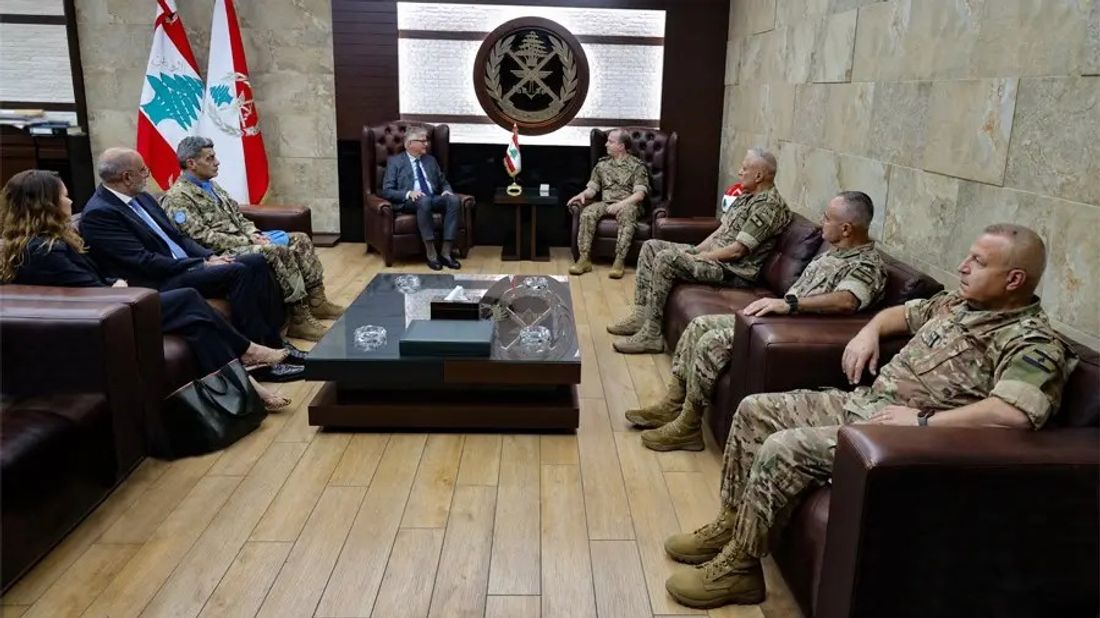
Lebanon is waging a carefully calculated diplomatic battle on legal, geographical, and political fronts to prevent the implementation of the UN decision to end the mission of the United Nations Interim Force in Lebanon (UNIFIL). Beirut is emphasizing the importance of maintaining the force to preserve security and stability, or, at the very least, establishing a UN force under the auspices of the UN Security Council.
Al-Liwaa newspaper quoted Lebanese sources as saying that Lebanon is fighting a preemptive battle with an unprecedented degree of domestic solidarity, whether at the level of the three presidents or through a petition signed by 86 lawmakers calling for UNIFIL to remain or, at the very least, for there to be no gap in the UN presence in the south. This was the impression conveyed by the lawmakers who signed the petition following their meeting with Prime Minister Nawaf Salam.
According to what Lebanon conveyed to UN Under-Secretary-General for Peace Operations Jean-Pierre Lacroix, the vacuum that would emerge in UNIFIL’s area of operations, where the Israeli army is currently deployed after occupying more than 65 villages located along the border and at distances of approximately 2 to 8 kilometers from it, could lead to a confrontation between the Lebanese and Israeli armies.
According to diplomatic sources in contact with the U.S. side, Washington’s position is linked to the need for the Lebanese state to buy time. UNIFIL, they say, would prevent Israel from establishing the security zone it seeks in southern Lebanon, while efforts would continue to address Hezbollah’s weapons.
Al-Liwaa learned from official sources that Lacroix came to hear Lebanon’s position on the options proposed by UN Secretary-General António Guterres regarding an extension of UNIFIL’s mandate. These options are expected to be discussed at an upcoming UN Security Council session to reach an appropriate decision.
All the proposed options are based on Lebanon’s request to extend the international force’s presence in the south, particularly given that, under the Security Council resolution, UNIFIL’s mandate and final withdrawal process are set to conclude in 2027. The resolution stipulates that the withdrawal will begin at the end of this year and continue into next year. Lebanon is therefore focusing on maintaining UNIFIL’s mission for as long as its troops remain deployed in southern Lebanon.
Al-Liwaa explained that, following the United States’ negative position on extending UNIFIL’s mandate, three options have been proposed, according to sources. The first involves a gradual, phased, and scheduled withdrawal of international forces to prevent an immediate security vacuum. This would begin with a reduction in troop numbers to a certain level, followed by further reductions in successive stages.
During this period, which could last several months, Lebanon would pursue diplomatic contacts to consolidate its position. President Joseph Aoun told the UN envoy that Lebanon was conducting contacts with all its friends and the parties concerned.
However, Lebanon’s primary option remains to formally request an extension of UNIFIL’s mandate, a move that depends on the U.S. position.
Nevertheless, a U.S. State Department official reiterated: “We do not support extending UNIFIL’s mandate in Lebanon beyond its expiration at the end of the year.”
Meanwhile, Al-Anbaa Al-Electroniya newspaper reported that the Lebanese state is prepared to negotiate on many issues related to the arrangements for the next phase, but remains determined to maintain UNIFIL or deploy another international force.
In this context, a proposal for the continued presence of unarmed international forces was raised during discussions with UN Under-Secretary-General for Peace Operations Jean-Pierre Lacroix, as part of the examination of possible arrangements for maintaining an international presence.
Discussing this proposal does not mean that a final formula has been agreed upon. The decision remains dependent on negotiations at the UN Security Council and the positions of the countries concerned.
Lebanon’s priority, however, is clear: to avoid an international vacuum in an area that remains under occupation and requires an entity capable of monitoring developments, facilitating aid, and helping prevent incidents on the ground from escalating into wider confrontations.
For his part, Lacroix urged the Security Council to begin serious negotiations on the future of the force, calling for a decision soon to provide clarity for planning the next phase.
He stressed the importance of having a third party to help de-escalate tensions, particularly given the presence of both the Lebanese and Israeli armies in the same geographical area.
This role takes on additional importance amid uncertainty over how UNIFIL positions will be handed over to the Lebanese Army, given that many of these positions are located in territories occupied by Israel.
Sources at Al-Diyar newspaper focused on Prime Minister Nawaf Salam’s remarks to Lacroix regarding “a new international formula for these forces,” questioning whether this means Lebanon would accept changes to UNIFIL’s mandate to make it more effective in addressing the issue of Hezb0llah’s weapons.