
PALESTINE
Al-Maghazi under the guillotine of demolition: A silent Israeli military advance consumes the heart of the camp and displaces its residents.
Nov 22, 2026
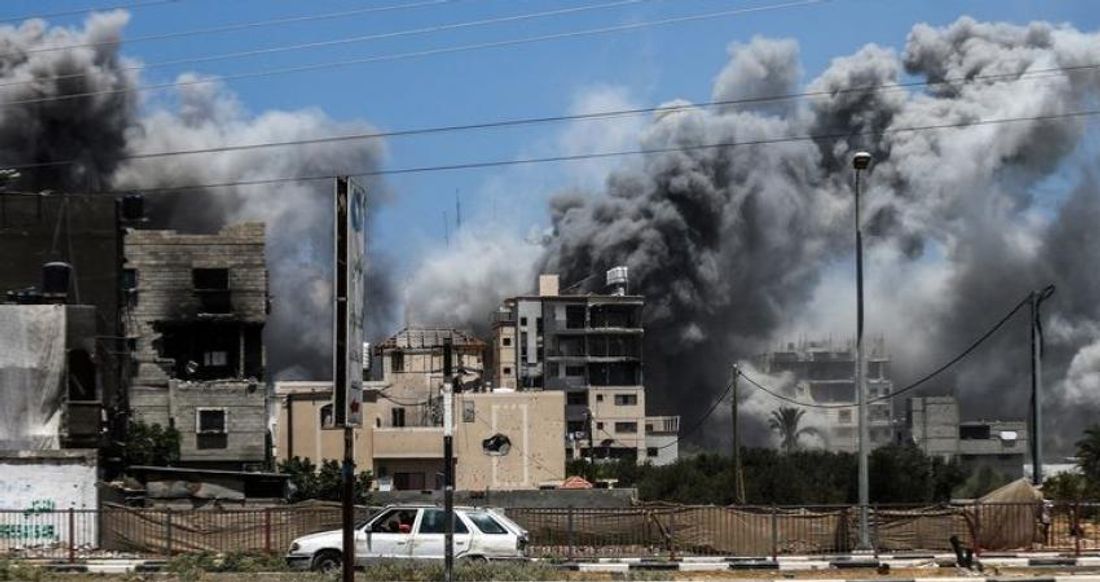
The alleyways of the Al-Maghazi refugee camp, located in the heart of the central governorate of the Gaza Strip, are enduring a silent holocaust and an exceptionally fierce Israeli military campaign aimed at erasing the Palestinian presence across the geography of this steadfast camp. For days, Israeli military vehicles and artillery have not ceased encroaching on the land, directly targeting residential blocks near the so-called dividing "Yellow Line." These successive field developments reveal a premeditated intention to impose a security belt through fire and ash, bypassing fragile truce understandings amidst a suspicious international silence covering the details of this ongoing crime.
Israeli operations in the eastern part of the camp have taken on a systematic, destructive character that relies less on military confrontation and more on blowing up entire residential blocks and neighborhoods using multiple, innovatively brutal methods. According to field testimonies, occupation forces are deploying suicide drones and quadcopters to drop massive explosive boxes and containers onto the roofs of houses, alongside planting conventional explosives inside residential buildings to annihilate them completely. This terrifying method has leveled hundreds of homes without prior warning, leaving behind massive destruction resembling the aftermath of a devastating earthquake that has completely obliterated the landmarks of these neighborhoods.
The occupation's arrogance has not been limited to aerial and ground demolitions, but has been accompanied by limited ground incursions reinforced with tanks and military bulldozers advancing east and southeast of the camp. These encroaching forces are bulldozing agricultural lands and striking already dilapidated infrastructure lines, while firing heavy gunfire and artillery shells indiscriminately toward citizens' homes. This synchronized military escalation aims primarily to impose a new fait accompli and expand the scope of Israeli military control by fire at the expense of the space dedicated to civilian life inside the camp.
As a result of this continuous bombardment and massacres moving from house to house, the eastern and central areas have witnessed a tragic new wave of forced displacement for thousands of residents. Palestinian families were forced to flee under a hail of shells, leaving behind their belongings and memories to search for elusive safety deeper inside the camp or in neighboring areas.
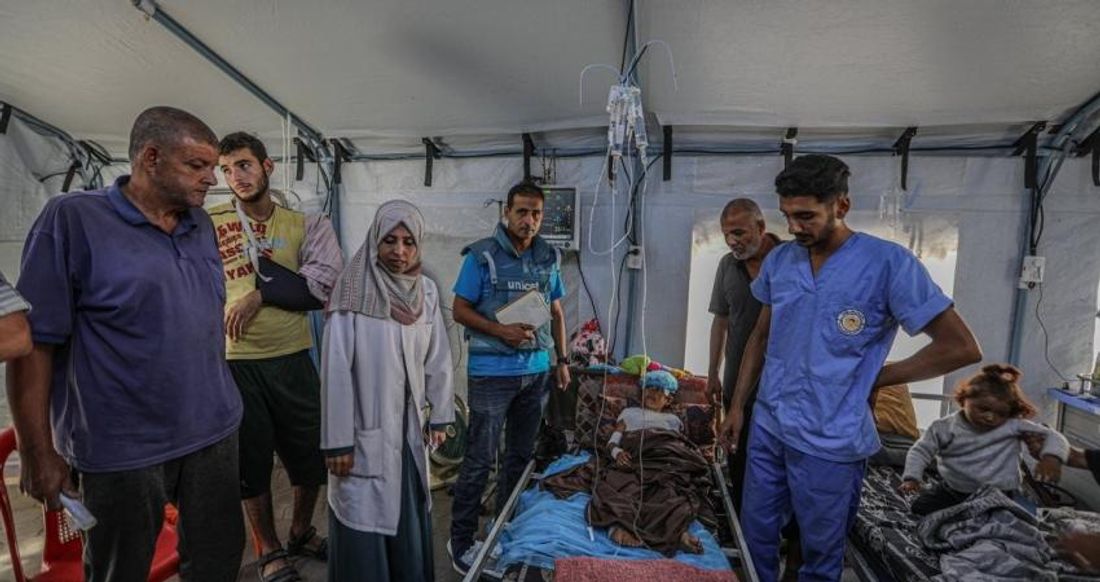
The humanitarian catastrophe is further exacerbated by the occupation shelling the vicinity of shelters and refugee schools, and destroying displaced persons' tents, which were blown away and charred by shrapnel—leaving thousands out in the open facing the bitter winter cold with no shelter or basic necessities for survival.
The Mayor of Al-Maghazi, Engineer Mohammed Sabri Musleh, speaks with a tone filled with anger and sorrow about the scale of the existential catastrophe striking the camp, confirming that the Israeli occupation has expanded the scope of its military control and systematic destruction to encompass about 45% of the camp's total area.
Musleh explained in an interview with Palestine Now that the scope of control was limited to about 20% following the recent ceasefire agreement; however, the Israeli army exploited periods of calm to encroach on more land and expand toward the central neighborhoods, noting that the danger is no longer confined to the eastern outskirts, but now directly threatens the heart of the camp and its administrative and service center.
He added: "The continuous daily shelling and demolition operations over the past two months alone have resulted in the total or partial destruction of more than 500 housing units, not to mention the destruction of 50 displaced persons' tents in a single night due to the targeting of surrounding blocks."
He continued: "The occupation has resorted to a brutal method of dropping explosive boxes via quadcopter drones to demolish homes over people's heads, without sending any warning leaflets or prior evacuation calls. This military behavior confirms the enemy's desire to inflict the greatest possible human and material losses to forcibly displace the population."
On the humanitarian and service front, Musleh issued an urgent distress call warning of the complete collapse of all vital sectors inside the camp due to the siege and continuous fire. He confirmed that the municipality and medical teams are suffering from an acute shortage of basic necessities, stressing the absence of equipped ambulances, which forces residents to transport the wounded and injured on animal-drawn carts. He also pointed out the inability of crews to reach the camp's main cemetery located east of the "Yellow Line," prompting families to bury their martyrs and dead in the cemeteries of neighboring Deir al-Balah and Nuseirat.
The mayor concluded his remarks by warning that the demolition and blowing-up operations are approaching the central area, which houses three UNRWA schools, vital shelters, and the only health center in the camp.
He called on the international community, the United Nations, and relief organizations to intervene immediately to break the silence and halt this destructive advance before the entire camp turns into rubble and memories. He emphasized that classifying the camp as a "high-risk area" has caused a decline in international interventions, urging those bodies to return urgently and provide tents, water, and medicine to save thousands of lives threatened with annihilation.
Citizen Raed Musleh, a resident of the eastern areas bordering the Yellow Line in Al-Maghazi camp, recounts the details of the night of displacement and destruction, describing it as a piece of real hell. He explained that the sounds of explosions resulting from the demolition operations shook the corners of the camp with unprecedented violence, accompanied by the trembling of the earth and the shattering of windows and walls over the heads of children.
In his account, Musleh noted that drones never left the sky and were dropping explosives indiscriminately, instilling a state of absolute and permanent terror in the hearts of families who did not know whether they would survive until morning.
The citizen bitterly recalled the moment he was forced to leave the home he had spent years building, explaining that the intense shelling and sudden incursion of Israeli vehicles left them no room to pack their belongings or grab their identification papers and children's clothes. He described running with his family through dark streets amidst fire and flying shrapnel, while their neighbors' homes collapsed and turned into piles of rubble within seconds due to continuous demolitions. He affirmed that the scene was akin to Judgment Day, as the screams of women and children rose in search of a safe passage to save their lives.
Raed Musleh describes his family's current reality after displacement as the pinnacle of human suffering, where they sleep on the ground under the open sky in overcrowded areas lacking the bare minimum of human necessities. He explained that they face extreme difficulty obtaining clean drinking water or food, let alone the lack of healthcare and medicine for children who have fallen ill from the cold and constant fear. He expressed deep bitterness at seeing his children shivering from the cold inside a worn-out tent that offers no protection from heat or chill, after having lived in dignity and safety within the walls of their destroyed home.
In conclusion, the citizen affirmed that what is happening in Al-Maghazi camp is a systematic liquidation and genocide aimed at uprooting Palestinian refugees from their land and displacing them for the thousandth time. He directed an angry message to the silent global conscience, questioning what sin unarmed civilians committed to have their lives and their children's futures destroyed and their tents burned over their heads.
Musleh stressed that despite all this death and destruction poured over their heads, the Palestinian people will remain clinging to the soil of their land and their camp, and will never surrender to the policy of forced displacement, no matter the sacrifices.


Salmon and Aging: Benefits That Go Beyond Heart HealthOct 31, 2026

Litani River Authority: Ministry of Public Works and the Authority Continue Rehabilitation Works on the Road Adjacent to the Qaraoun DamNov 21, 2026

Apple Enters the Foldable Phone Market with the Launch of the iPhone DuoOct 23, 2026
Hezb0llah: Will It Intervene or Stay Out?Oct 26, 2026
MOST READ NEWS
Salmon and Aging: Benefits That Go Beyond Heart HealthOct 31, 2026
Litani River Authority: Ministry of Public Works and the Authority Continue Rehabilitation Works on the Road Adjacent to the Qaraoun DamNov 21, 2026
Apple Enters the Foldable Phone Market with the Launch of the iPhone DuoOct 23, 2026
Hezb0llah: Will It Intervene or Stay Out?Oct 26, 2026
Subscribe to our newsletter
