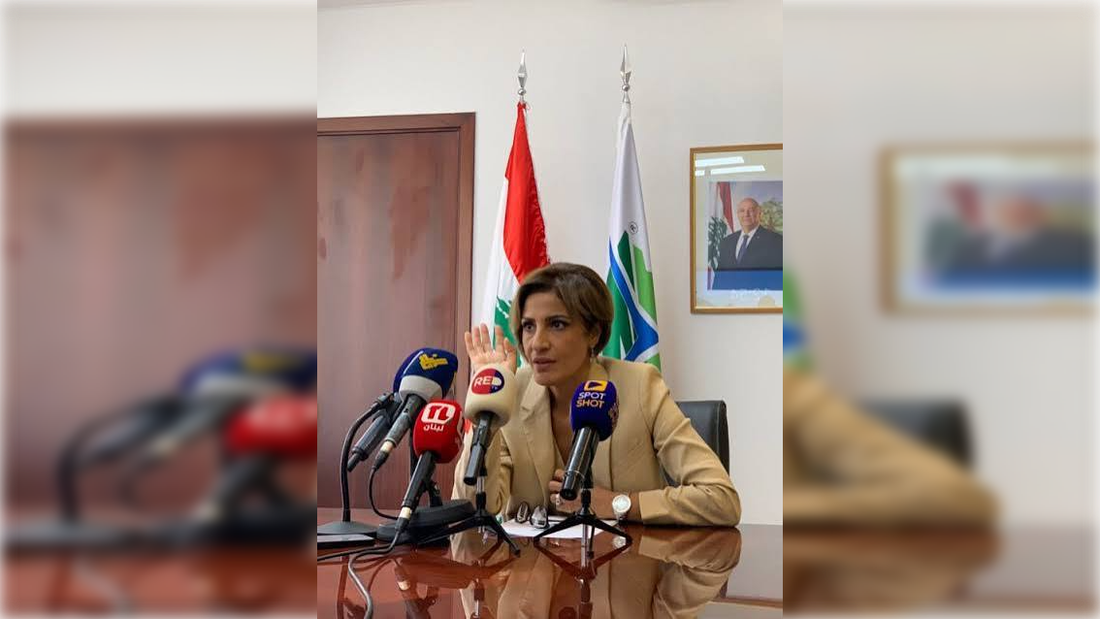
Environment Minister Dr. Tamara Al-Zein warned that the Israeli occupation army's theft of rubble from destroyed villages in southern Lebanon, particularly those that remain under occupation, threatens to erase physical evidence that Lebanon could rely on to document war crimes and pursue accountability and compensation.
Al-Zein issued the warning in a document she prepared entitled "Scientific Documentation and Environmental Accountability: Preserving Memory and National Rights." The document was presented on the occasion of the launch of a report entitled "The Documentary Nakba: The Impact of Israeli Aggression on Archives and Libraries in Southern Lebanon (Jabal Amel)," organized by the Lebanese Libraries Association and the Archives and Digital Media Lab, in partnership with the Biladi Association.
She announced that she was submitting the document, along with the facts and information it contains, to Deputy Prime Minister Tarek Mitri, who has been tasked with preparing Lebanon's file on international humanitarian law, for inclusion in the dossier he is scheduled to present next Wednesday during a meeting of the Human Rights Council in Geneva.
Al-Zein highlighted the significance of seizing the rubble of homes and neighborhoods after their destruction. She explained that the rubble contains physical evidence of what happened at each site and represents part of what remains of people's homes and villages.
She said that removing the rubble from its original locations "further deepens the targeting of collective memory and the existential connection to the land, while raising serious concerns about the concealment of physical evidence that could be used to provide further documentation of Israeli war crimes."
She called for these developments to be brought to the attention of Lebanese and international public opinion, and urged the documentation of bombing sites and the preservation of the remaining physical evidence found there.