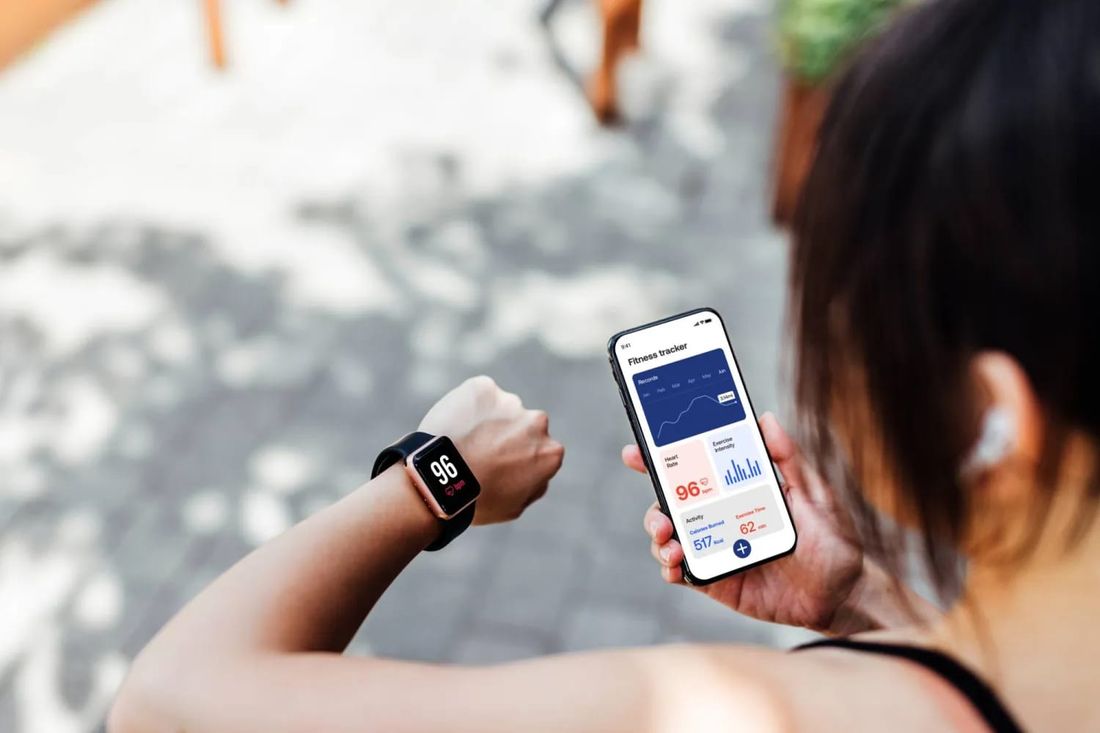
People may become overly reliant on wearable devices and stop paying attention to their “internal signals.”
Wearable technology presents an unusual paradox: the more physiological data you receive, the greater the likelihood that you may feel disconnected from, or anxious about, the body generating that data.
Wearable Devices and Mental Health
Millions of people now use wearable devices to regularly track their sleep, heart rate, breathing, blood oxygen levels and even bowel movements. This data can be useful to many people, encouraging healthier habits or even revealing serious medical problems. However, it may create an unexpected paradox for others: tracking their data can lead them to lose touch with their own bodies. This contradiction can affect mental health, daily activities and even physical well-being.
How can wearable devices change a person's mental state? This process depends on interoceptive awareness, or a person's awareness of what is happening inside their body, such as noticing their heart rate beginning to rise or sweat forming on their forehead.
Research shows that interoceptive awareness can help people cope with health challenges and chronic illnesses. This makes sense: trusting your ability to recognize and address a problem can reduce anxiety and promote a sense of calm. Wearable devices can be useful tools for people with limited interoceptive awareness, provided they use the data to listen more closely to what they actually feel at a particular moment or after a night's sleep.
However, according to Dr. Diana Kaplan, a clinical psychologist, health technology expert and assistant professor at Emory University School of Medicine, there are ways in which these devices can disrupt this awareness. In some cases, people may become so reliant on wearables that they stop paying attention to their internal signals. For example, seeing a low sleep score in the morning may prompt someone to cancel a workout or postpone a mentally demanding task, even when they feel perfectly fine.
Alternatively, imagine someone who completes a strenuous running race and feels completely satisfied afterward, only to receive an alert from their device indicating that their heart rate is much higher than expected. They may feel disappointed or even panic. There can be several reasons for an unusually elevated heart rate, some of them harmless, such as being at a high altitude, which a wearable device may not accurately account for. The discrepancy between a person's internal signals and external data may distort their experience of the workout itself and weaken their interoceptive awareness.
Excessive preoccupation with wearable devices may also push people to become overly physically active. One colleague, for example, recalled setting a goal one year of walking 10,000 steps every day. Even when she had COVID-19, she found herself going outside for a walk or pacing around her apartment at 11:30 p.m. to make sure she did not break her achievement streak!
Setting fitness goals is an excellent idea. However, data collection, which may initially seem like a game, can turn maintaining a streak into something almost sacred that must never be interrupted. This can make it harder to listen to the body when it needs rest.
Worsening Impaired Interoceptive Awareness
> Mismatch Between Internal Signals and External Information
Inaccurate data may also worsen impaired interoceptive awareness by creating a mismatch between internal signals and external information. According to a 2026 review conducted by Dr. Kaplan and her colleagues, the accuracy of health-tracking devices varies considerably depending on the product and the physiological indicator being measured. This can lead to unfounded concerns and false alarms.
“When it comes to health, having inaccurate data is more harmful than having no data at all,” Dr. Kaplan says.
For example, a wearable device may indicate that someone is doing well when that is not actually the case. People with chronic conditions, such as long COVID, chronic fatigue syndrome and chronic Lyme disease, are particularly interested in wearable technology because these conditions affect energy levels and cause exhaustion.
Such individuals may want to monitor their heart and breathing rates to understand how their bodies respond to different activities, ranging from sending emails and preparing breakfast to going for a walk.
The aim is to monitor their exertion levels so they do not push themselves beyond their limits and become completely exhausted.
However, wearable devices are generally calibrated using medically healthy populations, meaning they may fail to detect subtle changes in someone whose baseline physiological indicators differ. “This may cause someone with a chronic condition to overexert themselves,” Dr. Kaplan says. In this context, listening to the body becomes especially important. Relying on data instead of internal awareness may lead some people to push themselves too hard.
In another example, many wearable devices monitor the potential risk of atrial fibrillation, a particularly serious health concern. Although this indicator is based on scientific evidence, there is an important limitation: detection technology typically relies on optical sensors. Research shows that these sensors are less accurate on darker skin tones, resulting in more false alarms and potentially costly, avoidable medical bills.
> Interoceptive Awareness
Interoceptive awareness plays a role in many mental health disorders. A panic attack, for example, involves physical symptoms such as shortness of breath, an elevated heart rate and tingling in the hands and feet.
People may become aware of the symptoms preceding an attack, which is both understandable and important. However, wearable devices can complicate matters. Someone might check their device, see an elevated heart rate—which could have many different causes—and become anxious. This anxiety raises their heart rate further, prompting them to check the device again and see an even higher reading, and so the cycle continues.
“People can fall into a vicious feedback loop,” Dr. Kaplan says.
Michael Sivia, a family physician in Ohio, has observed difficulties among patients whose Apple Watch, Fitbit or Oura Ring led them to underestimate their own assessment of their health or mental state. “For certain individuals, the number on the device determined how they felt,” he says.
In a recent article published in The Wall Street Journal, journalist Pamela Paul describes her experience using an Oura Ring. She brilliantly sums up the paradox of interoceptive awareness: a device designed to connect her with her body ultimately caused her to lose trust in it.
“Why did I believe the ring instead of my own body, like someone who trusts a weather app over what they can clearly see outside the window?”
Being aware of this dynamic can help prevent excessive disconnection from internal bodily signals.
To improve interoceptive awareness, people can practice deep diaphragmatic breathing or grounding exercises, which can be as simple as noticing how their feet feel against whatever surface they are standing on. Taking a few minutes to notice how the body feels during different activities, such as exercising, socializing, working or resting, can also be beneficial.
These practices can strengthen the ability to focus inward and better understand what the body is feeling.