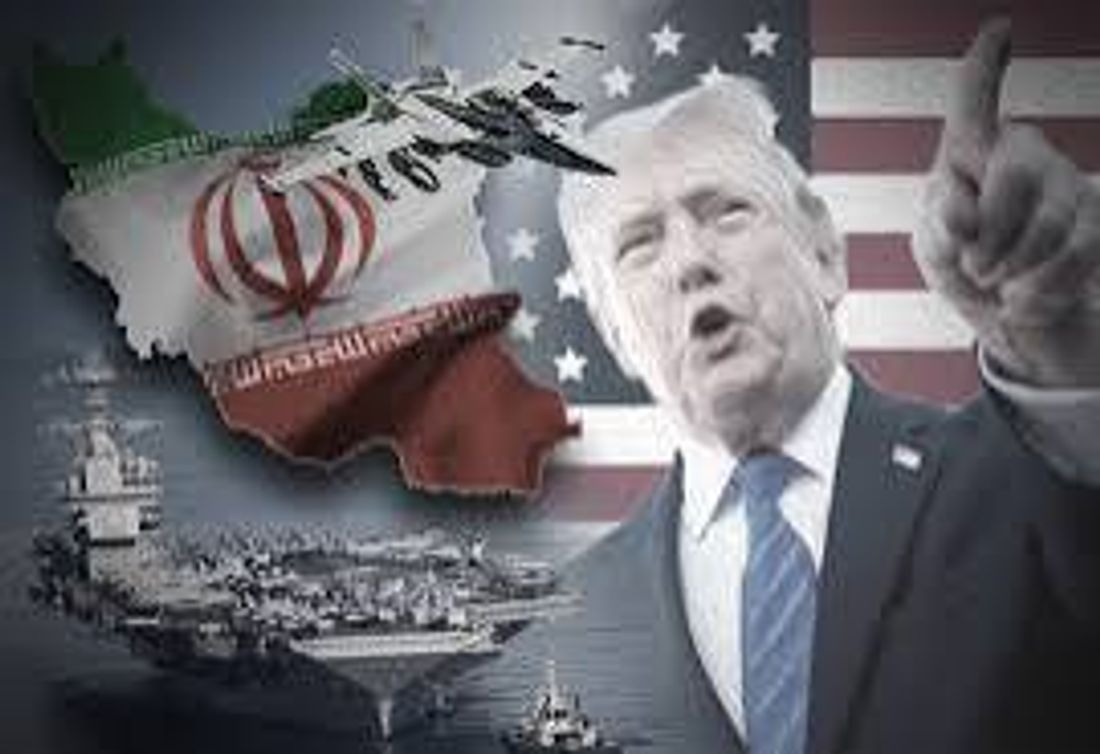
Britain's The Times has revealed that U.S. President Donald Trump faces complex military and financial calculations that may push him to hold off before resuming the war on Iran, given the heavy losses suffered by American forces in earlier confrontations and Tehran's continued ability to launch retaliatory attacks against American interests in the region.
Despite Trump's escalating threats to launch new strikes against the Iranian regime, and the U.S. Department of War's massing of a huge naval force that includes three aircraft carrier strike groups, the cost of the previous confrontation, which exceeded $43 billion, is raising questions in Washington about the value of returning to military operations.
The British newspaper noted that Trump, who has repeatedly threatened to destroy the Iranian regime since the bombing stopped last summer, pledged not to take any new military step before the congressional midterm elections scheduled for November 3.
Losses in the billions
One of the main obstacles to resuming the war is the scale of damage to American bases and military equipment during Operation "Epic Fury." Iranian attacks caused billions of dollars in losses, in addition to draining large stockpiles of interceptor missiles used in air defense systems.
The newspaper said that 81 U.S. military aircraft were destroyed or damaged during the confrontations, noting that several of them were targeted by the Iranian Revolutionary Guard with the help of intelligence drawn from Chinese and Russian satellites.
The losses included 12 F-15 fighters, 9 of which were hit by Iranian fire, two A-10 attack aircraft, and 7 KC-135 aerial refueling aircraft, 5 of which were attacked by Iran at an air base in Saudi Arabia.
An E-3 Sentry airborne early warning and control aircraft was also destroyed while on the ground, along with the loss of 45 MQ-9 Reaper drones, each costing about $34 million.
The cost of the American war on Iran has exceeded $43 billion since it broke out last February, with military spending reaching about $1 billion per day at the height of operations.
These figures leave the American administration with two risky options: either resume strikes in the hope of forcing Tehran to accept a deal that Washington can present as a political victory, or face a new wave of Iranian attacks that could multiply military and financial losses.
Iran's military capabilities
Despite the American naval blockade on Iran's oil export ports and the extensive damage it has caused the Iranian economy, Tehran has managed to repair a large part of the military facilities targeted by American and Israeli strikes, according to the report. The Times explained that the repairs included missile and drone launch platforms and weapons production facilities, giving Iran the ability to respond if Washington decides to resume military operations.
These developments further complicate American calculations, especially since rehabilitating the damaged bases and replacing the lost aircraft may require tens of billions of dollars in additional spending.
The newspaper quoted a former senior U.S. defense official as saying that damage to military bases, shortages of munitions, particularly interceptor missiles, and aircraft losses are all factors influencing decision-makers' calculations, though not necessarily decisive on their own. He added that the decision will depend largely on the extent of Iranian escalation in the Gulf and the Strait of Hormuz, especially if an American ship is attacked with a large number of casualties.
The official pointed out that the war does not enjoy broad public support inside the United States, that support has been low since the beginning, and that Trump has not offered the American public convincing justifications for the necessity of waging it.
Thus, Trump's decision on whether to resume the war on Iran is tied not only to the ability of American forces to carry out new strikes, but also to the scale of losses Washington may bear and its readiness to enter an additional confrontation that could extend to military bases and maritime corridors, imposing financial and strategic burdens that go beyond the limits of the conflict with Tehran.