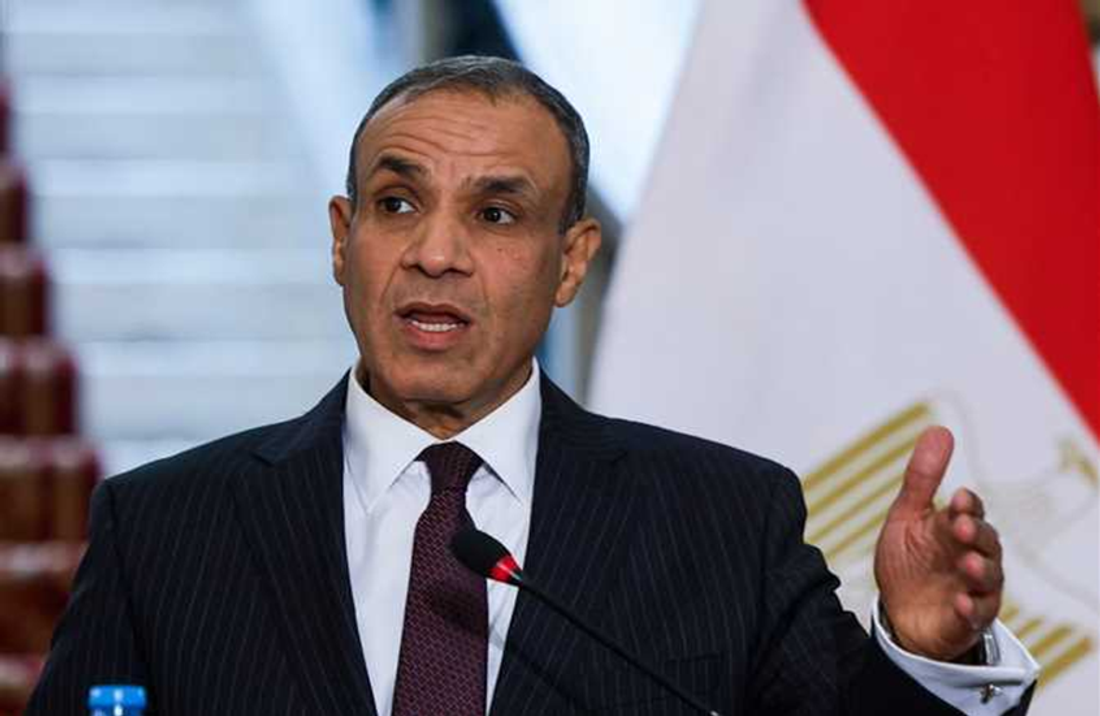
Egyptian Foreign Minister Badr Abdel-Aty affirmed that developments in the region since October 7, 2013, have proven that any attempts to impose hegemony or redraw the map of the Middle East unilaterally will not succeed.
"Greater Israel Will Not Be Realized": Egyptian Foreign Minister Comments on Attempts at Regional Hegemony
The Egyptian minister stressed that any future regional arrangements must be based on consensus among the countries of the region, which includes influential regional powers. No country, regardless of its strength, can impose its will or dominance on others through coercion or military force.
In response to a question about whether the idea of a "Greater Israel" or redrawing the region has become unattainable, the Foreign Minister emphasized that any project based on imposing a unilateral will will not succeed, and that the collective will of the countries of the region is the foundation for any future arrangements.
Regarding the so-called "Regional Quartet," comprising Egypt, Saudi Arabia, Turkey, and Pakistan, Abdel-Aty clarified that a more accurate description is that it is a "platform for consultation and coordination" among four influential regional states, and not a military or political alliance.
He added that the platform aims to enhance cooperation among the four countries in various fields, as well as coordinate positions on regional issues, most notably the repercussions of a potential Iranian-Israeli war, the course of negotiations, and post-war arrangements in the region.
He noted that Egypt is also coordinating closely with Saudi Arabia, the UAE, and the Gulf Cooperation Council (GCC) states to develop a shared Arab and regional vision for the future of the region, emphasizing that the door is open for other regional parties to join, provided they adhere to the agreed-upon parameters.
The Foreign Minister revealed that the Regional Quartet has held four meetings to date, confirming the continuation of the consultation and coordination mechanism among the participating countries.
On the Palestinian issue, Abdel-Aati stressed that any arrangements concerning the control of weapons must be made within a Palestinian-Palestinian framework, and not through their handover to Israel. He affirmed that Egypt is acting out of its national responsibility to preserve the Palestinian cause and prevent the continuation or expansion of the occupation.
The minister warned that the plan to displace Palestinians remains in place, indicating that making life inside the Gaza Strip impossible could force residents to leave under the guise of "voluntary departure," given the continued deterioration of the humanitarian, health, and environmental conditions, and the lack of any early recovery or rubble removal projects to date.
Source: Al-Shorouk