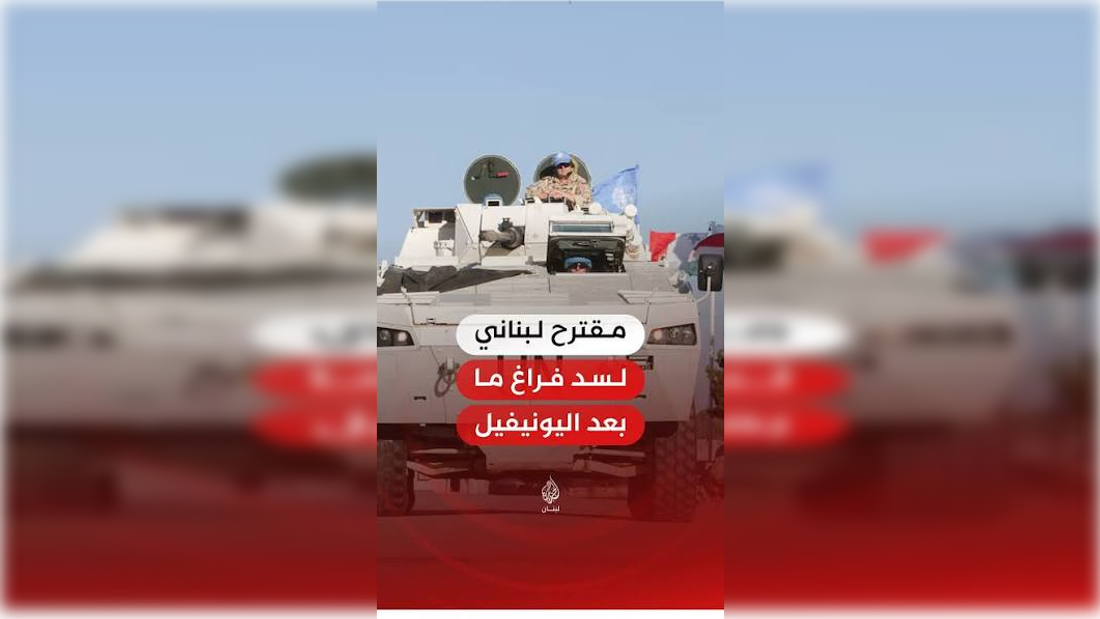
The newspaper Al-Liwaa has learned from official sources following deliberations at the UN Security Council regarding the formation of an international force to replace UNIFIL that no progress has been made so far. The discussions have not yet taken on an official character; rather, they remain an exchange of ideas and proposals conveyed by the French representative.
The French representative is expected to present, within days and possibly at the beginning of next month, a formula agreed upon during informal discussions for establishing an alternative force tasked with monitoring, verifying, and following up on any security incidents in the south, and reporting on them.
The sources added that, pending the establishment of this force, the French proposal focuses on slowing the withdrawal of international troops over a period of approximately six months. During this period, they would continue carrying out the aforementioned tasks, alongside their ongoing humanitarian and civilian activities serving the interests of residents in southern Lebanon.
These measures have been described as an attempt to buy time until the regional and international situation becomes clearer, as well as the composition, nature, and policies of the new Israeli government.
Meanwhile, Al-Diyar newspaper reported that France is proceeding with drafting the proposal it agreed upon with the United States, which calls for the deployment of several hundred observers along the international border between Lebanon and Israel. However, the core of the anticipated political and diplomatic dispute revolves around the legal basis for this deployment.
Expectations suggest that the proposal could be based on Chapter VII of the United Nations Charter, which allows the use of military force to enforce the implementation of the tasks assigned to these observers.
The newspaper explained that, in an assessment of the balance of power within the Security Council, diplomatic circles believe this approach will inevitably encounter a Russian veto, given Moscow's close alliance with Tehran. This would push efforts toward limiting approval of the French proposal to Chapter VI, which relies on peaceful solutions and rules out the use of force.
This debate brings to mind the experience of UNIFIL following the adoption of Resolution 1701 after the July 2006 war. At the time, the framework of Chapter VI prevented the international force from being granted strong enforcement powers, weakening its ability to enforce international resolutions along the Lebanese-Israeli border.
Al-Diyar added that, on the ground, military experts have expressed serious concerns that any delay in approving and deploying the international observer mission could create a dangerous security vacuum, placing the Lebanese Army in direct confrontation with the Israeli army, thereby increasing friction and tensions along the entire border.
The newspaper continued that, in parallel, a European diplomatic source conveyed its assessment of the positions taken by various Lebanese parties regarding these proposals. The source noted that the formula put forward by Parliament Speaker Nabih Berri represents an integrated approach to safeguarding Lebanon's interests, from his perspective.
President Berri's proposal is based on the need to maintain an international force operating exclusively under the framework of UN Security Council Resolution 1701, with the aim of reinforcing the resolution and ensuring the actual implementation of all its provisions, particularly those concerning arrangements in southern Lebanon, ensuring a complete Israeli withdrawal, and addressing the issue of weapons within the agreed frameworks.
Berri's proposal also emphasizes rejecting the deployment of multinational forces outside the framework of the United Nations. It strongly opposes the idea of incorporating the Framework Agreement into Resolution 1701, based on the conviction that the agreement lacks any explicit and clear provision obligating Israel to withdraw from Lebanese territory and contains ambiguous security clauses between the two sides.
He maintains that the Framework Agreement should under no circumstances be adopted as the governing reference for relations or for the situation on the ground in Lebanon.
Meanwhile, Al-Anbaa's electronic edition revealed that Washington has requested direct communication between the Lebanese and Israeli armies. This is an old proposal that predates the Tampa negotiations, during which the Lebanese Army sat opposite the Israeli army under US mediation.
In contrast, the proposal for a gradual withdrawal of international forces has resurfaced, with the troops continuing to carry out their missions throughout the withdrawal process in order to avoid leaving southern Lebanon without international monitoring.
This proposal was raised during recent discussions involving US Ambassador to the United Nations Mike Waltz and could serve as a reference point in the draft resolution currently being prepared by Paris.