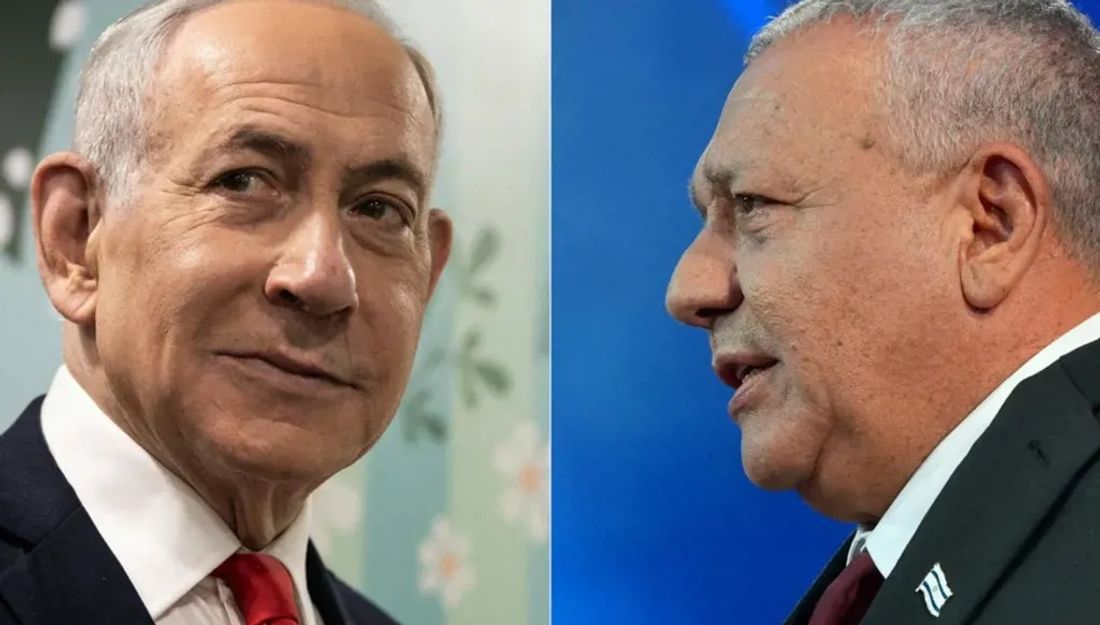
A meeting between Israeli Prime Minister Benjamin Netanyahu and Yashar Party leader Gadi Eisenkot took place today after being moved to the headquarters of Israel's Defense Ministry, known as the Kirya, in Tel Aviv. The meeting was set to begin with a security briefing.
Following the conclusion of the meeting, negotiating teams from both sides will continue discussions at the Dan Accadia Hotel in Herzliya, without the participation of Netanyahu and Eisenkot.
Negotiators representing both parties have held five meetings over the past two weeks.
On Saturday, Netanyahu said he was prepared to allow Eisenkot to serve as prime minister first, as part of a proposed rotation arrangement under a national unity government. Netanyahu confirmed his willingness to abandon the principle that the largest party should lead the government in the face of what he described as threats to Israel's existence.
Eisenkot had previously announced that talks with Likud had made no progress. In a post on the X platform, he said Likud had refused to make concessions on fundamental issues, including his demand that hardliners be excluded from the government.
Eisenkot accused Likud representatives of stalling and buying time until the December 6 deadline for forming a government expires, with the aim of paving the way for early elections.
Nevertheless, Eisenkot emphasized that progress had been made on other fronts. Coalition agreements have been signed with the far-right Yisrael Beiteinu party and the liberal-left Democrats party. He added that he was also working with a third opposition party to reach an agreement.
There is also a possibility that opposition parties, led by Eisenkot, could form a government with the participation of ultra-Orthodox Jewish parties (Haredim), which until recently belonged to Netanyahu's political camp.
However, these parties are demanding broad exemptions from military service for religious Jews, while Eisenkot, a former chief of staff of the Israeli military, insists on mandatory conscription for all citizens.
Eisenkot has also raised the possibility of forming a minority government that would rely on support from Arab parties in the Knesset.