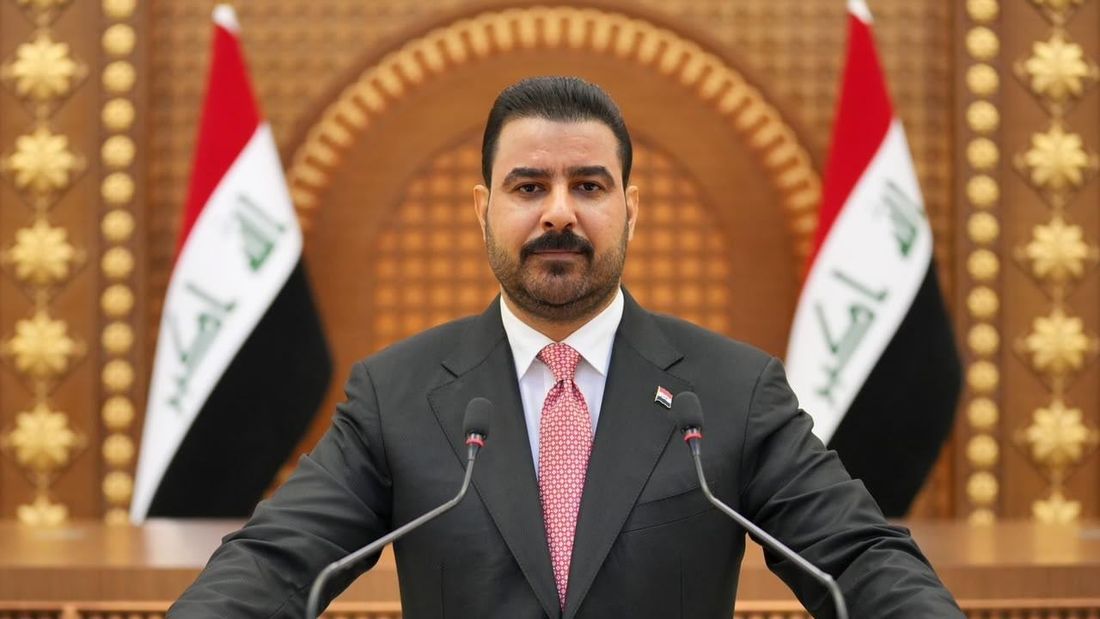
Iraqi Prime Minister Ali al-Zaidi issued a series of dismissals and removals from office on Tuesday following a report by an investigative committee into oil smuggling at the North Oil Company.
In a statement carried by Al-Sumaria News, Sabah al-Numan, spokesperson for the Commander-in-Chief of the Armed Forces, said that Prime Minister and Commander-in-Chief Ali Faleh al-Zaidi had reviewed the report of the special investigative committee on oil smuggling at the North Oil Company.
“Proceeding from the principle that national sovereignty is indivisible, and that protecting Iraq’s wealth is an existential battle in which the state must draw a clear line against all forms of smuggling, His Excellency ordered a series of measures and decisions, as follows:
First: Administrative and Disciplinary Decisions and Measures
The head of the Border Ports Authority has been relieved of his post.
Both the Kirkuk Operations Commander and the Kirkuk Police Chief have been dismissed for failing to follow up on the issue of fuel smuggling.
The commander of the First Energy Police Brigade, his deputy, the head of intelligence at the First Brigade, and the head of the brigade’s checkpoints division have been relieved of their duties.
A reprimand has been issued to the directors of National Security and National Intelligence in Kirkuk Governorate.
The director-general of the North Oil Company and his deputies have been suspended from their duties pending completion of the investigation by the Federal Commission of Integrity. The former director-general has also been referred for investigation.
The head of the inspection department in Kirkuk, affiliated with the State Company for Oil Products Distribution, has been relieved of his post for failing to perform his duties.
The director-general of Industrial Development and the director-general of the State Company for Mining Industries at the Ministry of Industry and Minerals have been suspended from their duties pending completion of the investigation by the Federal Commission of Integrity.
Second: Administrative and Technical Recommendations
1. Referring files and violations to the judiciary
The files and violations are to be referred to the judiciary, with the Federal Commission of Integrity tasked with investigating the following alleged violations and presenting its findings to the judge of the Central Anti-Corruption Criminal Court:
a. Reviewing contracts for the sale of petroleum products concluded between the North Oil Company and the “Silver Axis” Company, as well as other companies, and verifying all quantities supplied.
b. Auditing the mechanism for delivering or supplying crude oil by the Ministry of Oil to the Bazian and KAR refineries, and ensuring that the quantities supplied match those received.
c. Investigating the director and employees of the North Oil Company over alleged negligence, failure to follow up, and the existence of violations.
d. Investigating licenses granted by the Ministry of Industry and Minerals, through its Industrial Development Directorate, to all factories, as well as companies that have caused a waste of public funds.
e. Investigating payments made to civilian guards assigned to protect oil pipelines, as they are reportedly not actually present at the North Oil Company.
f. Investigating violations related to the absence of laboratory testing and identifying the quantities of petroleum products exported outside Iraq through border crossings in the Kurdistan Region.
2. Measures concerning the Kurdistan Region of Iraq and border crossings
a. The Kurdistan Regional Government Presidency is to be instructed not to grant approval for the export of crude oil or petroleum products except through the federal Ministry of Oil, in order to prevent overlapping jurisdictions.
b. The Border Ports Authority is to take control of all border crossings in the Kurdistan Region of Iraq.
c. The Ministry of Oil is to be instructed to manage all oil fields belonging to the ministry and located within the administrative boundaries of Diyala, Kirkuk, Salah al-Din, and Nineveh governorates, which are under the security authority of the Kurdistan Regional Government.
3. Security, military, and border-control measures
a. The Border Guard Command is to close all unofficial crossings along Iraq’s international borders with neighboring countries, including crossings in the Kurdistan Region of Iraq.
b. The Ministry of Defense is to instruct the First and Second Joint Operations Brigades to close all unofficial roads between Diyala, Salah al-Din, Kirkuk, and Nineveh governorates and the Kurdistan Region of Iraq.
c. The Ministry of Interior is to instruct the Energy Police Directorate to take control of and monitor all oil fields using surveillance cameras, including fields located within the administrative boundaries of the federal government but falling under the security authority of the Kurdistan Regional Government.
4. Technical, oversight, and engineering measures
a. Establishing a clear mechanism to regulate the movement of petroleum products between governorates and through border crossings, which all relevant authorities must follow.
b. Adopting modern technologies to protect and monitor oil pipelines and wells, including establishing a national digital system to monitor oil pipelines and detect smuggling.
c. The Ministry of Oil is to install electronic meters on all operational oil wells across Iraq.
d. The engineering team affiliated with the Prime Minister’s Office is to prepare designated areas at checkpoints on the entrances to Sulaymaniyah, Erbil, and Duhok. These areas will be staffed by employees of the Ministry of Oil, Energy Police, and National Security, and laboratories will be established at these checkpoints to test products entering those governorates.
e. The Ministry of Industry and Minerals is to be instructed to relocate all oxidized asphalt and naphtha plants located within the administrative boundaries of Diyala, Salah al-Din, Kirkuk, and Nineveh governorates, and situated outside the federal government’s security control, to other locations within these governorates within six months.”