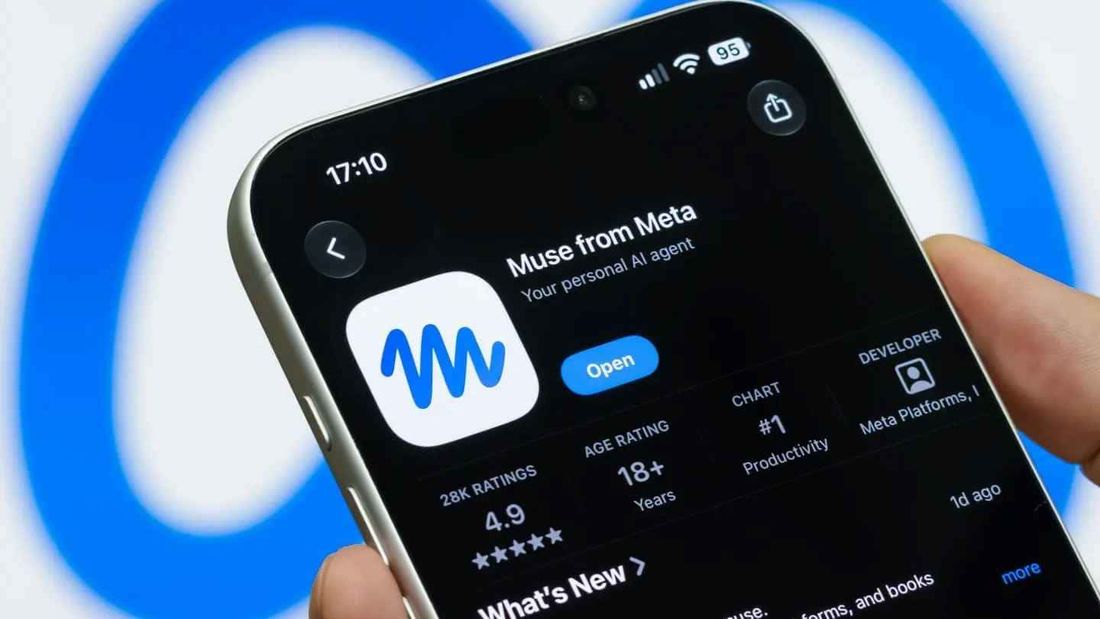
As users increasingly rely on AI assistants to perform everyday tasks, answer questions, and share personal information, concerns about data security and conversation privacy are growing.
A single conversation with an AI agent may contain personal details or sensitive information, making any potential security vulnerability a major source of concern for users.
Security Vulnerability
Recent security research has uncovered a vulnerability in Meta's Muse AI agent that could allow a malicious website to access users' conversation histories and the memories stored by the AI assistant without displaying a clear request for their consent.
In this context, researchers at cybersecurity firm NebuSec conducted a laboratory experiment demonstrating how a malicious webpage could exploit the cloud-based runtime environment of the AI agent.
The findings have raised questions about the ability of security measures built into AI agents to prevent personal data leaks, particularly as these systems gain broader permissions and become increasingly capable of interacting with applications and accounts on users' behalf.
Weaknesses
The researchers explained that the experimental attack relied on a chain of vulnerabilities within Muse's runtime environment, beginning with the exploitation of a malicious webpage opened by the agent while performing a task.
According to the published findings, the webpage was able to access conversation histories and saved memories, as well as transmit data to an external server and modify certain information, all without displaying a window requesting the user's consent.
The scenario did not end there. The researchers said they were also able to combine a vulnerability in the agent's built-in browser with another flaw in the Linux kernel, allowing them to take control of the cloud-based runtime environment assigned to the user.
Scope of the Risk
The danger posed by this vulnerability lies in the nature of the information handled by the AI agent. Conversations may contain personal details, saved memories, and data related to the services and accounts users connect to the assistant.
The report noted that the experimental exploit chain reached the account credentials store, saved files, and Sentinel security system, which Meta designed to monitor the agent's outgoing activities and prevent unauthorized actions.