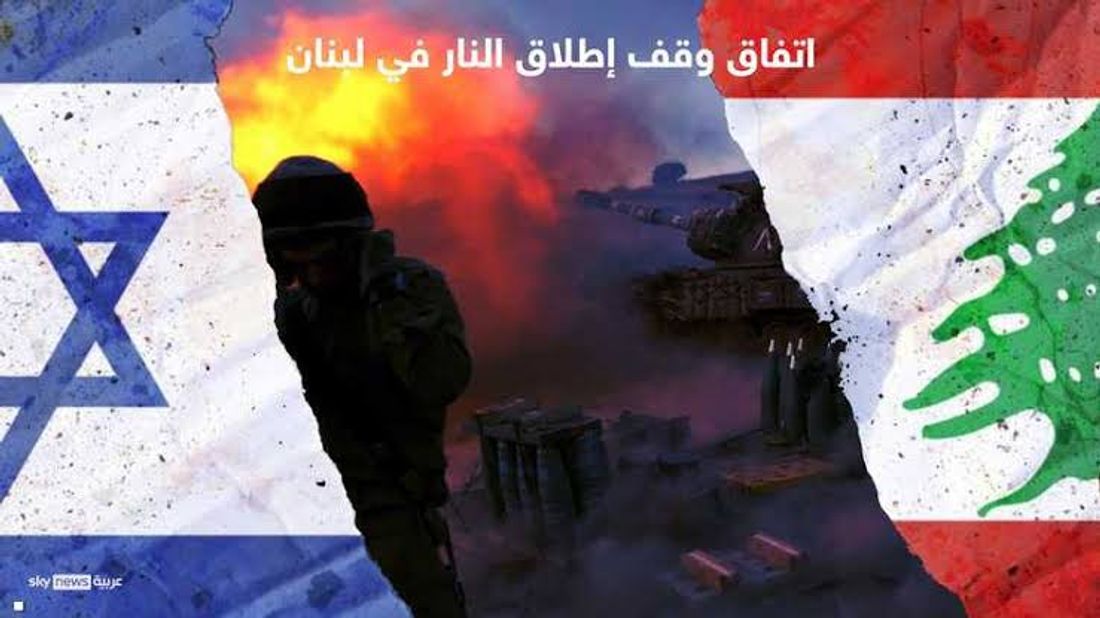
Today marks the second anniversary of the ceasefire agreement reached on November 27, 2024, between Israel and Lebanon, with the outcome amounting to little more than a stalemate.
Al-Diyar newspaper reported:
"Two years have passed, and Lebanon remains submerged in a sea of blood and tears as a result of Israeli brutality against people and property, amid international and Arab silence and the failure of all initiatives to find solutions.
The question is: What remains of the November 27 agreement other than the ink with which it was written? Were the Lebanese wrong to enter into yet another agreement that guaranteed them neither a ceasefire, nor an Israeli withdrawal, nor the continued presence of international forces, nor an end to the daily cycle of violence? These questions remain unanswered to this day, amid the continuation of the lengthy American-led drama."
*Al-Liwaa* newspaper also reported:
"The ceasefire in southern Lebanon on November 27, 2024, applied only to Lebanon, not Israel, which continues its attacks and hostile operations against civilians, homes, fields, and olive trees. Israel has also obstructed efforts to reach an agreement with the Lebanese state, which has clearly declared its commitment to negotiations and diplomacy within the framework of what has been called the 'Framework Agreement.'"
*Al-Anbaa* newspaper reported:
"Two years after the November 27, 2024 agreement, whose main objective was to halt hostilities between Lebanon and Israel, restore the state's exclusive authority over weapons and decisions of war and peace, and link stability in the south to the responsibility of the Lebanese Army and the implementation of UN Security Council Resolution 1701, none of these commitments appears to have changed.
In this context, the trilateral framework signed by Lebanon and Israel under US auspices is part of a negotiating process that has failed to achieve its objectives. These include, first and foremost, an Israeli withdrawal from occupied territories, placing all weapons exclusively under state authority, and the full deployment of the Lebanese Army throughout all Lebanese territory.
The failure to implement these commitments is attributable, on the one hand, to Israel's continued aggression against Lebanon and, on the other, to Hezbollah's refusal to hand over its weapons to the Lebanese Army.
This means that Lebanon remains in a state of serious danger as a result of continued Israeli attacks, particularly as the end of the mandate of the United Nations Interim Force in Lebanon (UNIFIL) in southern Lebanon draws closer."