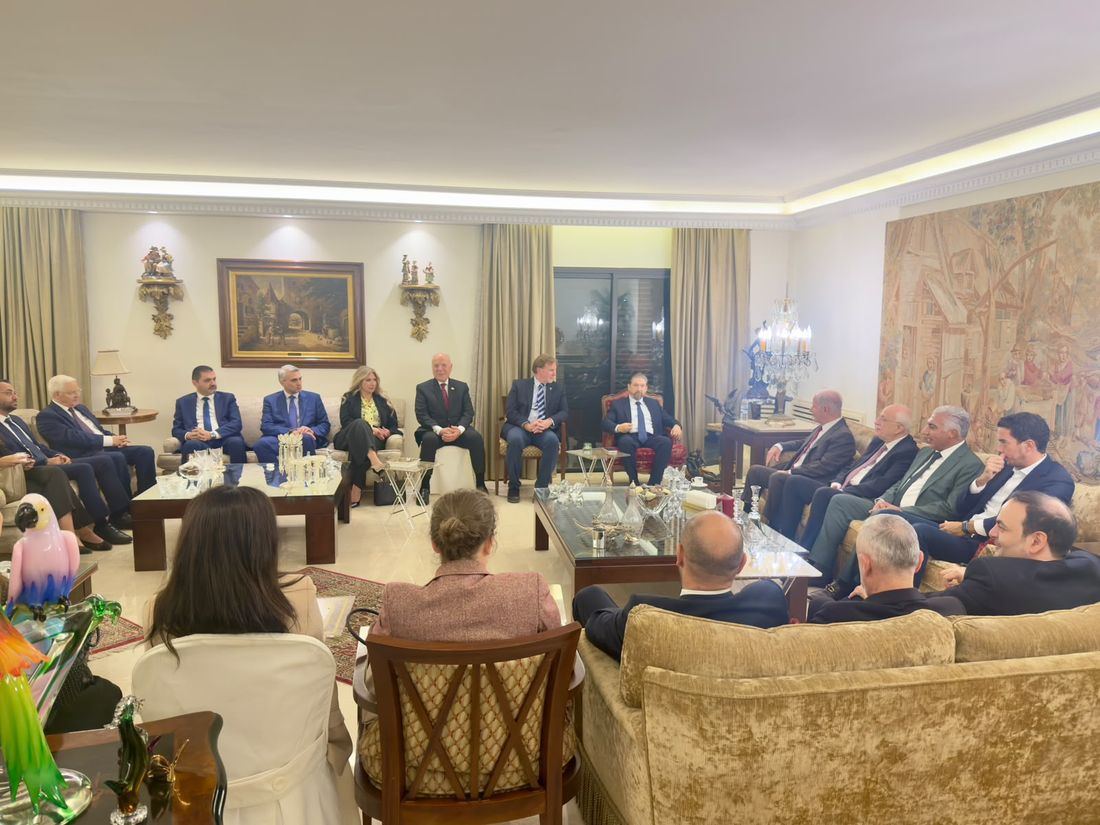
Karamah Movement leader and MP Faisal Karami received U.S. Ambassador to Lebanon Michel Issa at his residence in Tripoli, accompanied by a delegation of embassy administrators and staff. The visit brought together the city’s members of parliament, official, economic, and municipal figures, as well as heads of key institutions. It provided an opportunity to discuss the priorities of Tripoli and northern Lebanon, the resources available to support their development, and the Lebanese political and economic situation.
The meeting gained significance from being held at Karami’s residence and bringing together a broad parliamentary and institutional representation. This allowed the city’s needs and potential to be presented comprehensively, placing its strategic projects at the center of discussions with the U.S. ambassador, given Tripoli’s role as a key pillar in any economic recovery and development process in Lebanon.
The meeting was attended by MPs Taha Naji, Karim Kabbara, Haidar Nasser, and Jamil Abboud; North Lebanon Governor Iman al-Rafei; Tripoli Mayor Abdul Hamid Karimeh; President of the Dannieh Municipalities Union Mustafa Saadeh; and President of the Tripoli and North Lebanon Chamber of Commerce, Industry, and Agriculture, Tawfiq Dabbousi.
Also in attendance were Hani Shaarani, chairman of the Rashid Karami International Fair; Hassan Dannawi, head of the Tripoli Special Economic Zone; Iskandar Bendali, chairman of the Tripoli Port Authority; Baqaasafrine Mayor Khaled Badra; and Saba Zreik.
The meeting addressed development and living conditions in Tripoli and northern Lebanon, as well as the need to activate key economic institutions and support projects capable of stimulating investment, creating job opportunities, and improving public services. Discussions highlighted the city’s facilities and institutions, which could play a pivotal role in the national economy if provided with the necessary resources for operation, development, and support.
Ambassador Issa listened to the heads of the institutions as they presented their perspectives on the future of Tripoli and northern Lebanon, their plans to develop the facilities under their responsibility, the challenges they face, and the available investment and cooperation opportunities. The discussion offered a picture of a city with the foundations for recovery that is seeking to translate its potential into practical projects that improve the lives of its residents and the people of northern Lebanon.
Ambassador Issa expressed his satisfaction with the consensus among participants regarding the city’s priorities and their commitment to developing its institutions and establishing a vision for its economic and developmental future.
The meeting at Karami’s residence provided a platform for direct dialogue between the U.S. ambassador and representatives of the city and its institutions, giving the visit a dimension beyond protocol and allowing for substantive discussions on the actual needs of Tripoli and Dannieh. It also underscored the importance of unifying efforts around the city’s interests and presenting clear demands backed by a vision built on its resources, facilities, and opportunities, recognizing Tripoli as an essential partner in Lebanon’s recovery.