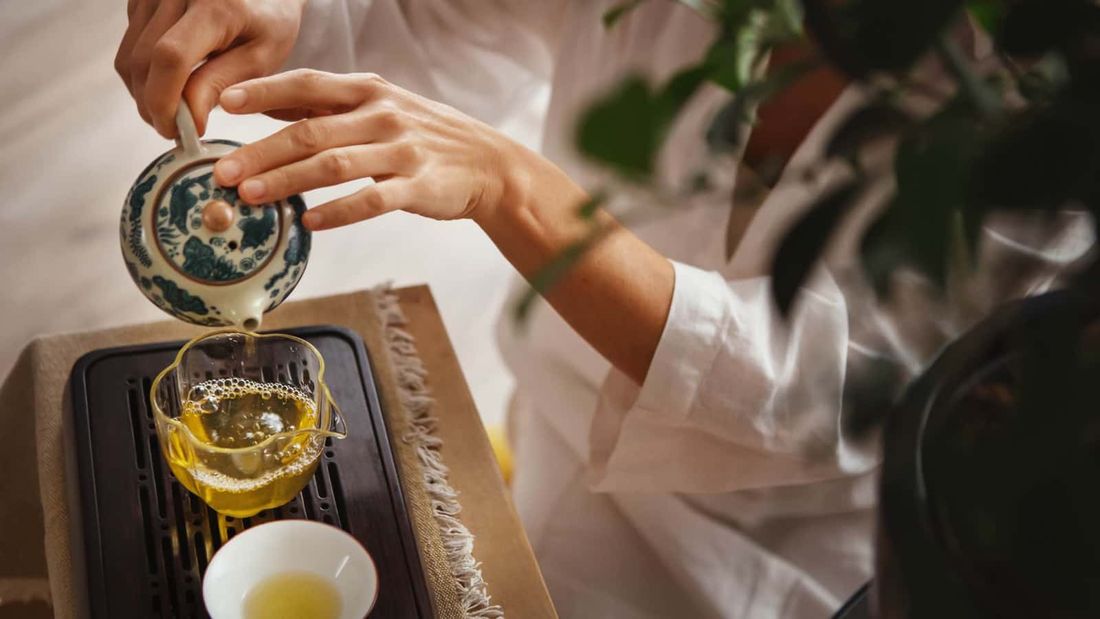
Decaffeinated green tea may be a suitable option if you want to enjoy the beverage while consuming less caffeine.
However, the term "decaffeinated" does not mean that the tea is completely caffeine-free, nor does every product contain the same amount, according to Al-Tibbi.
The benefits of decaffeinated green tea cannot be summed up by saying that it retains all the benefits of regular green tea or loses them entirely. It still contains compounds from tea leaves, but their concentrations vary from one product to another.
Most importantly, the presence of antioxidants alone does not prove that the beverage can treat or prevent a disease. So, how does it differ from regular green tea?
This type of tea is made from green tea leaves that are then processed to remove most of their caffeine. This distinguishes it from herbal infusions, which do not contain tea leaves in the first place.
The method used to remove caffeine may vary from one manufacturer to another, and the taste may differ slightly as well.
Packaging may carry the terms "Decaf" or "Decaffeinated," both of which indicate that caffeine has been removed. However, words such as "natural," "organic," and "mint" do not indicate whether the caffeine has been removed.
If the ingredients include regular green tea, adding mint or lemon does not turn it into decaffeinated tea.
It may be a suitable option for those who want a lower-caffeine cup of tea in the evening. However, it is not a sleep-inducing drink, and the "Decaf" label does not guarantee that it will have no effect on your sleep.
If you notice that caffeine disrupts your sleep, pay attention to your total caffeine intake throughout the day, not just your evening cup. Knowing how much caffeine is in different beverages can also help you identify other sources of caffeine in your diet.