
LOCAL NEWS
What is the story behind adopting the symbols of the "Republican Elephant" and the "Democratic Donkey"?
Nov 2, 2026
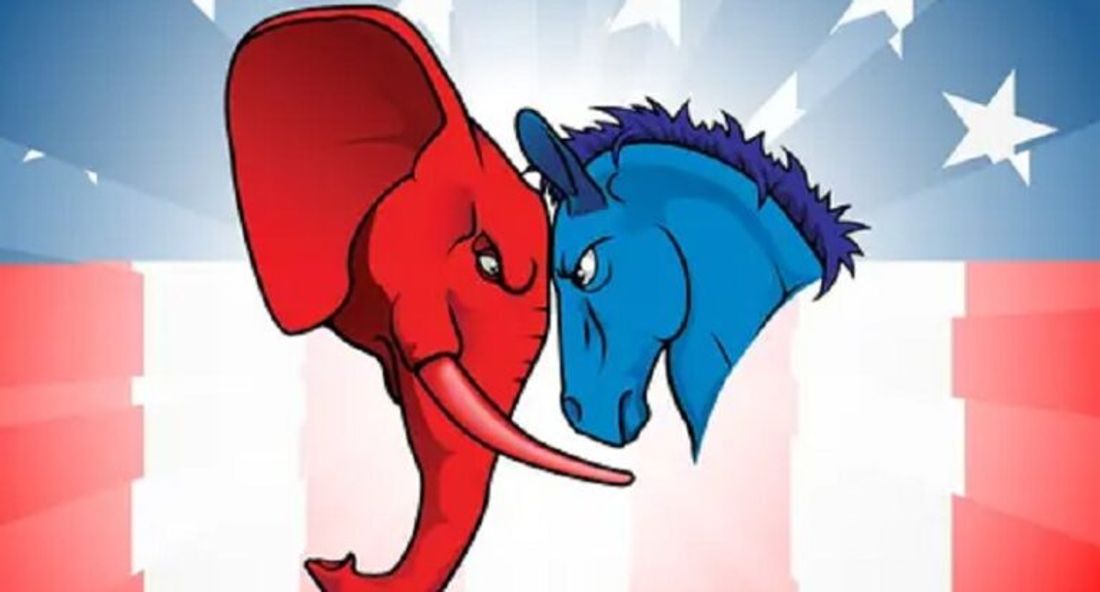
Every political party in the world is typically distinguished by a specific color and a logo that symbolizes its path or ideology—ranging from swords, crescents, crosses, globes, to torches, and other symbols that tell the story of the party's thought and reason for inception.
However, the United States has a different approach, as both of its major parties, the "Democratic" and the "Republican," have adopted animal symbols.
Since the 19th century, the "Republican Elephant" and the "Democratic Donkey" have had a major presence on the political scene as symbols of the two largest parties in the United States of America.
Since the 1850s, these two parties have dominated the U.S. presidential races, with Millard Fillmore, a member of the Whig Party, being the last American president who did not belong to either the Republican or Democratic Party during his presidency.
Credit for the emergence of the elephant and the donkey as symbols of the Republicans and Democrats goes to the American cartoonist Thomas Nast, who heavily promoted these symbols and led to their official adoption by the two parties.
The origins of the donkey logo for the Democrats date back to 1824.
That year, four candidates from the Democratic-Republican Party ran for president: Andrew Jackson, John Quincy Adams, William H. Crawford, and Henry Clay.
In that election, Andrew Jackson won the most votes, but failed to secure an outright majority in the Electoral College to guarantee him the presidency.
Consequently, the U.S. Congress had to choose the president. To everyone's surprise, Congress voted to appoint John Quincy Adams as president.
Faced with this situation, Andrew Jackson broke away from the Democratic-Republican Party and, in 1828, formed a new party named the Democratic Party.
Following this, Andrew Jackson’s political opponents took to calling him a donkey. Meanwhile, Jackson adapted to the situation and embraced the label, praising the donkey on multiple occasions for its qualities of persistence and hard work, and even adopting it on several campaign posters for the Democratic Party.
For its part, the Republican Party officially emerged in 1854, rallying anti-slavery advocates and many former members of the Whig Party.
The Republican Party enjoyed a rapid rise. By 1860, Abraham Lincoln was elected president, becoming the first Republican to hold the office.
The symbol of the elephant first appeared during the American Civil War. According to several sources, the elephant appeared as a symbol of the Republican Party on a few occasions in political magazine cartoons and a newspaper. Additionally, the elephant gained importance during the Civil War as Union soldiers viewed it as a symbol of strength, combat, and struggle.
The elephant and the donkey transformed into the official symbols of the Republicans and Democrats beginning in 1874. During that period, the New York Herald sought to strike fear into Americans by reporting that Republican President Ulysses S. Grant was preparing to run for a third term, portraying him as a dictator. In response, Thomas Nast, a cartoonist of German descent known for his support of the Republicans, depicted the New York Herald as a donkey disguised in a lion's skin, roaring to scare the other animals, while embodying the Republican Party as an elephant tumbling off a cliff.
On another occasion, Nast used the elephant to represent the Republican Party. That same year, Nast presented another drawing of the Republican Elephant trampling over Democratic candidates.
By 1880, many American cartoonists were readily using the elephant to signify Republicans.
On the other hand, Nast used the donkey multiple times to mock the Democrats. Between 1873 and 1874, Nast used a "confused donkey" to portray the predicament of the Democrats regarding inflation.
Thanks to Nast's intensive use of the donkey and the elephant, these two animals transformed into the symbols of the Democratic and Republican parties. For about 150 years, these two symbols have been closely intertwined with the parties.
Source: Al-Jareeda News Website

NEXT ARTICLE
Al-Allamah Al-Khatib: We Had Hoped the Independence Speech Would Be Unifying and That the President Would Rise Above Directing Accusations at a Group That Sacrificed Its Blood

PREVIOUS ARTICLE
UNIFIL Commander on the 83rd Anniversary of Lebanon's Independence: We Reaffirm Our Commitment to Supporting the Lebanese Army to Make South Lebanon Safer and More Stable



Police searching for woman accused of leaving crash scene near elementary school in Huron TownshipNov 11, 2026

Postpartum Rage: A Common Psychological Condition Affecting New MothersOct 25, 2026

“Nas El Ghiwane”: How Has the Moroccan Heritage Band Remained Relevant for 60 Years?Nov 14, 2026

Trump: Meeting Between Putin and Zelensky to Be Arranged SoonOct 28, 2026
MOST READ NEWS
Police searching for woman accused of leaving crash scene near elementary school in Huron TownshipNov 11, 2026
Postpartum Rage: A Common Psychological Condition Affecting New MothersOct 25, 2026
“Nas El Ghiwane”: How Has the Moroccan Heritage Band Remained Relevant for 60 Years?Nov 14, 2026
Trump: Meeting Between Putin and Zelensky to Be Arranged SoonOct 28, 2026
Subscribe to our newsletter
