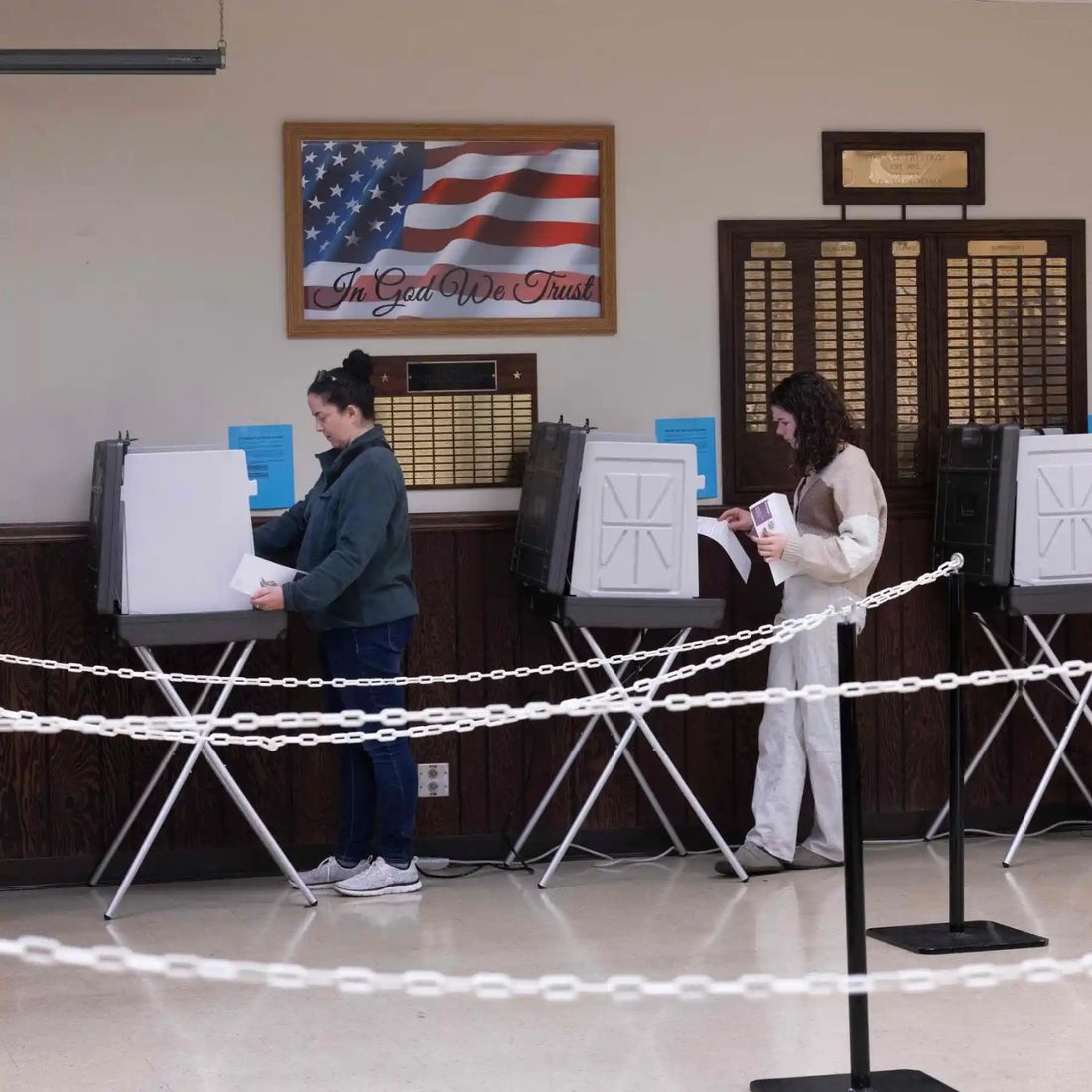
Americans are heading to the polls today, Tuesday, to vote in the midterm congressional elections, a contest that will serve as a nationwide referendum on President Donald Trump's second term, amid signs that Democrats could win control of one or both chambers of Congress.
Winning control of the House of Representatives alone would give Democrats significant leverage over the federal budget. Meanwhile, Republicans losing their majority in either chamber, two years before the end of Trump's term, would complicate his legislative agenda.
As public frustration grows over the rising cost of living and the repercussions of the war on Iran, approval ratings for Trump and the Republican Party have fallen to their lowest levels.
Candidates are competing for all 435 seats in the House of Representatives, 35 of the Senate's 100 seats, and governorships in 36 states. Democrats need to gain just three seats in the House and a net four seats in the Senate to take control of both chambers.
When Trump returned to the White House for a second presidential term, he pledged to lower prices. However, inflation, tariffs, and rising fuel costs resulting from the conflict in the Middle East have increased pressure on Americans.
In the suburbs of Atlanta, Georgia, retired teacher Jane Callum, 77, was among the Democratic volunteers supporting Senator Jon Ossoff. She told Agence France-Presse: "I really feel it's my duty to do everything I can to change the direction our country is heading in right now, and bring it back to the path of democracy and away from authoritarianism."
Republicans argue that Trump's tax cuts and tougher immigration measures will benefit Americans, while portraying Democratic candidates as having far-left views.
However, Trump only briefly addressed the economy during his final campaign appearance before Election Day. He spent most of his speech discussing a renovation project involving Washington's Reflecting Pool, which has faced several problems. Trump said: "This is the final day before the midterm elections, and I think these are the most important midterm elections of our lifetime."
He focused on his project to renovate landmarks in the U.S. capital, overlooking issues weighing on voters, such as inflation and the war against Iran. Senate Democratic Leader Chuck Schumer, meanwhile, described Trump's remarks as a "pathetic closing message."
Despite Republicans holding a 53-to-47 majority in the Senate, the electoral battle has extended to conservative states such as Kansas, Texas, Iowa, Ohio, and Alaska. To win a Senate majority, Democrats are counting on victories by Talarico in Texas and Hamilton in Kansas.
Democrats, meanwhile, must defend closely contested seats, including in Michigan, where Democratic Representative Haley Stevens announced Sunday that she was supporting Republican candidate Mike Rogers against Abdul El-Sayed, who defeated her in the Democratic primary. Trump welcomed the move.
Decision Desk HQ, an organization specializing in election projections, expects Democrats to win a Senate majority, with 52 seats compared with 48 for Republicans. It also projects that Democrats will take control of the House with a comfortable majority of 241 seats to 194.
Republicans are hoping their supporters will turn out in large numbers on Election Day, as opinion polls sometimes underestimate the actual level of support for one of the two parties.
Around 57 million people had cast their ballots before Election Day, a record figure. Campaign spending on political advertising exceeded $11 billion, while billionaire Elon Musk, a close Trump ally, poured hundreds of millions of dollars into supporting Republican political efforts.
As polling stations close, questions are mounting over whether Republicans will accept the election results.