Hiba Nour: Arabized Drama Is a Positive Phenomenon, and Abed Fahd Is Exceptional
Oct 12, 2026
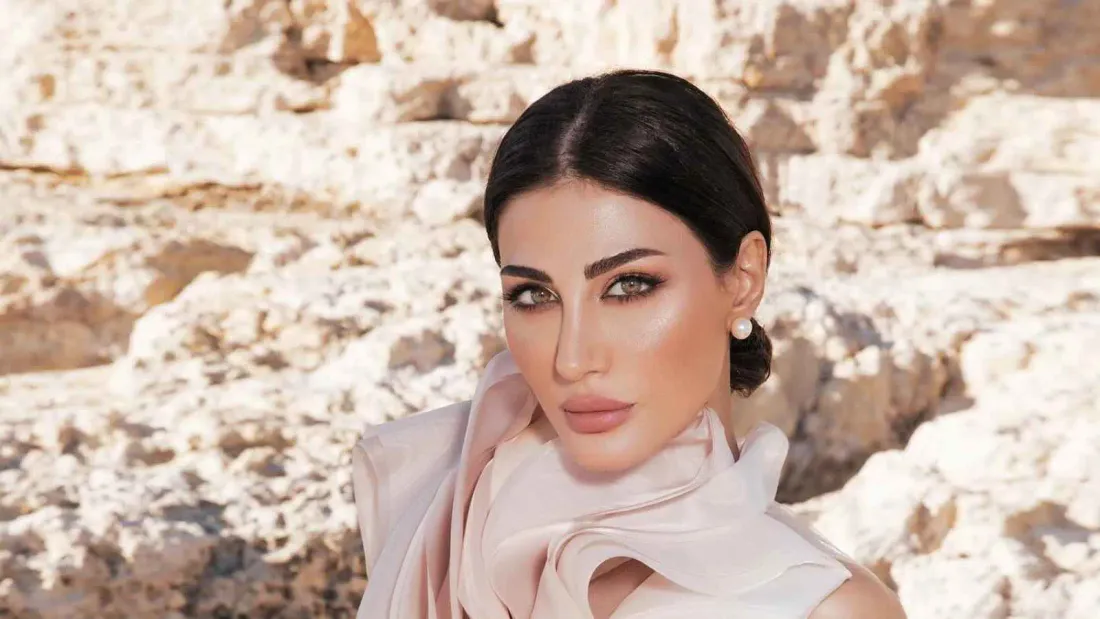
With remarkable talent and an alluring presence, Syrian star Hiba Nour has carved out a distinctive place for herself on the drama scene, proving that when beauty is paired with talent, it becomes an added strength in an artist’s hands.
Hiba Nour has taken on a wide range of characters, delivering diverse roles in terms of their composition and dimensions, while maintaining her ability in every experience to get close to each character and give it her own distinctive traits.
In this week’s interview with foochia, Syrian actress Hiba Nour revealed the criteria she uses when choosing her roles and spoke about her experience in “Saadat Al Majaneen.” She also opened up about the current state of Syrian drama, the phenomenon of Arabized productions, and the ambitions of Arab women.
Hiba Nour: Quality and Value Matter to Me, Not the Number of Roles
What are you preparing for the upcoming Ramadan drama season?
I have already received several offers for different drama projects, and I am still in the process of reading the scripts and carefully studying the details. To be honest, I have not made a final decision yet, because I always prefer to take enough time to carefully choose my next step.
Have you become more selective in your artistic choices?
Yes. With time and experience, a person becomes more aware and careful about what they present. For me, the number of roles is no longer as important as the quality and value that a project leaves behind. That is why I have developed more precise criteria when choosing characters and scripts that challenge my abilities and live up to the expectations of the audience that follows my work.
What criteria do you use when selecting your roles today?
The most important thing for me is to completely move away from stereotypical roles. I am always looking for a character that presents me with a new challenge and pushes me as an actress, so that I do not feel I am repeating myself or resembling characters I have played in previous works. It is also important to me that the role has genuine depth and impact and leaves a lasting impression on viewers, away from repetition.
Do you think the character of Atab in “Saadat Al Majaneen” helped you present a new role last season?
Absolutely. I was specifically looking for change, and when the character was offered to me, I was drawn to it because it has a gentle yet impactful side that reflects the reality of Arab women and their ability to endure difficult circumstances in life. I was also happy to collaborate for the first time with the great star Abed Fahd and to work once again with director Seif El Din Sbeih.
How would you describe the opportunity to work with Abed Fahd?
Working with Abed Fahd is an exceptional experience and, without a doubt, a genuine addition to any actor. He is an exceptional artist with tremendous passion for his work, a commanding presence, and remarkable charisma in front of the camera. Working alongside him gives you positive energy and pushes you to deliver your best because he is professional and supportive of his colleagues, creating a genuine sense of artistic harmony in every scene he shares with them.
Hiba Nour: This Is the True Measure of Any Production’s Success and Longevity
How do you assess the current state of Syrian drama, particularly amid the crowded landscape of diverse productions?
Syrian drama has always possessed a strong foundation and a distinctive spirit that enables it to recover and reach the hearts of Arab viewers with sincerity and spontaneity, thanks to the efforts of its writers, directors, actors, and technical teams. At the same time, however, we cannot deny that we are going through a very delicate period. Economic conditions have created a complex reality and major challenges that are now directly affecting the continuity and production of works in the best possible manner. We therefore need a serious reassessment of many production and marketing aspects to protect this industry and ensure that its presence remains as strong as audiences have always known it to be.
In your opinion, what does Syrian drama need today?
Above all, Syrian drama needs to return to being very close to people, their daily concerns, and the realities of their lives. When viewers see themselves and their issues reflected on screen honestly and without exaggeration, the genuine connection between audiences and their screens returns. The audience is highly aware and is always looking for productions that touch their hearts and genuinely express their experiences. This is the true measure of any production’s success and longevity.
Do you think Syrian drama has been affected or declined because of the recent wave of Arabized productions?
Not at all. Every form of art has its own character and audience, and every dramatic format is completely different from another. Arabized productions have their own flavor and approach, while Syrian drama has its own identity and spirit that cannot be compared to anything else. No wave can erase it or diminish its standing.
How do you view the phenomenon of Arabized drama, which has gained widespread popularity recently?
I see it as a very remarkable and positive phenomenon. What truly makes me happy and proud is that these productions often feature Syrian actors in leading roles and highlight the talents of our stars. In doing so, they open up new horizons and offer audiences a different and entertaining experience, while reaffirming the presence of Syrian actors and their ability to shine in any dramatic format.
At the same time, we have to be fair: the attention given to visual elements in Arabized drama has reached very high and professional levels. Image quality, advanced lighting and filming techniques, meticulous attention to costume details, and the selection of beautiful natural filming locations are all factors that work in these productions’ favor, particularly because they offer viewers a rich visual experience that allows them to immerse themselves fully in the atmosphere of the story.
Hiba Nour: Arab Women Have Become Essential and Genuine Partners in Decision-Making and Change
I believe the ambitions of Arab women today are extraordinary and truly inspiring, despite all the major challenges and difficulties surrounding them, whether in our societies or under the conditions of contemporary life. Women prove day after day that they do not believe in the impossible. They are not content merely to establish their presence; they excel, distinguish themselves, and confidently enter even the most challenging fields. This determination to succeed and the ability to turn challenges into opportunities are what make me extremely proud of every Arab woman striving to fulfill her potential and leave her own mark on society.
Do you believe Arab women have gained their rights and secured the position they deserve, or is there still a long way to go?
Arab women have taken tremendous and remarkable steps and proven their worth in the most challenging positions and responsibilities. They have become essential and genuine partners in decision-making and change. However, there are still social and cultural challenges that require more time and awareness to undergo fundamental change. What I truly believe is that women do not wait for someone to grant them their rights or position; they earn them through their competence, education, and determination to succeed.
We have noticed that you have made relatively few appearances on social media platforms. How do you view these platforms today?
I have not completely withdrawn from them, but I have always believed that my presence should be genuine and meaningful, rather than simply being there constantly. Social media has become an inseparable part of our lives and a profession in its own right, giving us a wonderful opportunity to communicate directly with people. However, I always prefer to maintain a clear boundary between my personal life and the digital space, so that everything receives the attention it deserves.
In general, given the negative changes taking place on social media and the decline in the quality of its content, people who value credibility tend to limit their digital presence.
How do you deal with criticism?
Criticism is an essential part of any artistic experience. It is natural for me to consider certain opinions and reflect on them, particularly when they come from someone with genuine insight. Over time, however, I have learned to distinguish between criticism that I can benefit from and opinions that should not affect my choices or my confidence in myself.
If you could go back to the beginning of your artistic career, would you make the same choices?
Perhaps I would change some details, and that is natural because people learn from their experiences. But I do not like to regret past choices, because all of them contributed to shaping the person and actress I am today. Even difficult experiences played a role in teaching me and giving me greater experience in dealing with my profession.
Source: foochia