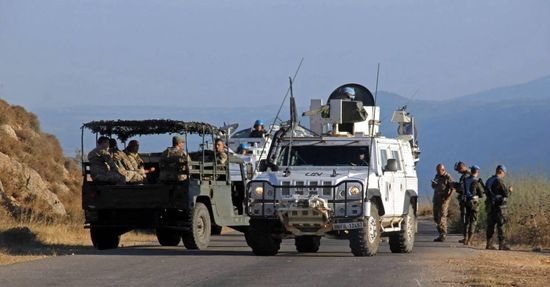
Lacroix to visit Beirut... Information on a US formula for deploying European forces in the south, and what matters is US and Israeli facilitation of its mission
Oct 12, 2026
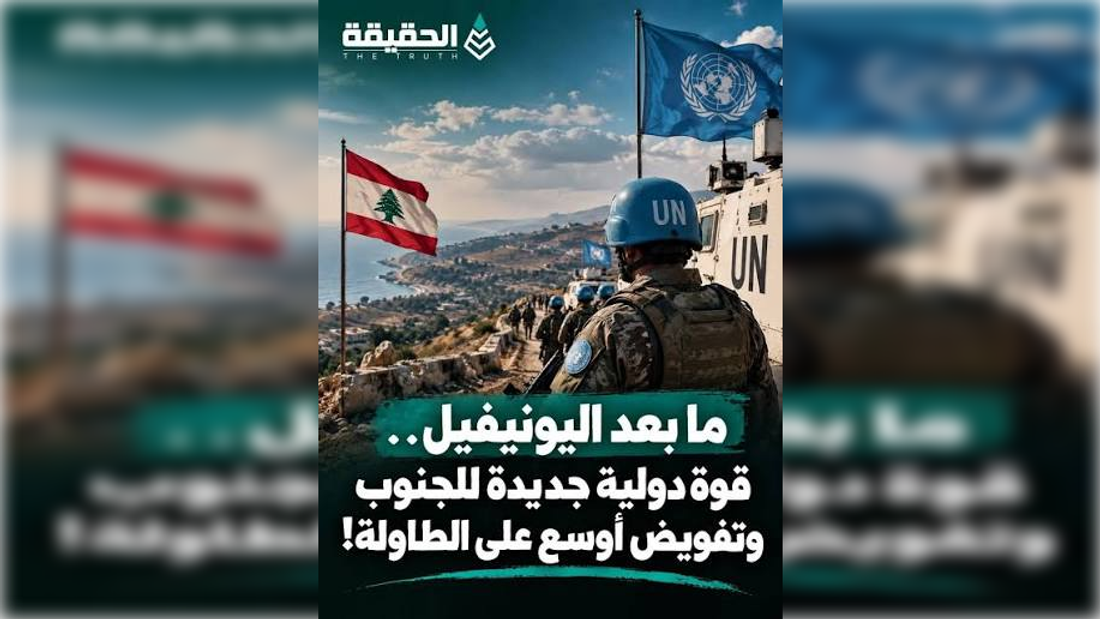
Today in Luxembourg, EU foreign ministers meet to discuss establishing a civilian-military European mission in Lebanon. Its task would be to provide expertise and training to the Lebanese army and the Internal Security Forces, with the aim of strengthening the state's control over its territory and its capabilities in border security and internal security. The details of the mission and its role will be a subject of US-European discussion. According to information, the US-European understanding on the nature of the upcoming mission and its powers has not yet been settled.
According to earlier indications about the formation of the force, its role, in addition to supporting the army and security forces, is limited to internal security and social tasks throughout Lebanon and along the borders, always under the heading of disarming Hezb0llah. This force will not be deployed in the south, and its roughly one hundred personnel would barely suffice to cover Lebanon's territory. The EU's foreign policy and security chief, Kaja Kallas, affirmed that "this mission is not a substitute for UNIFIL, and its scope of work will not be limited to southern Lebanon. It will include strengthening control over territory, border security and internal security, in line with Resolution 1701, and providing the necessary assistance to Lebanon, especially to the army, the Internal Security Forces and bodies concerned with social and humanitarian matters."
Al-Liwaa added: Among the European task force's missions is also securing the future of border villages, particularly the Christian ones. These depend on field arrangements to ensure the arrival of aid and basic supplies to returnees, if Israel allows them to return. Dozens of border villages have been destroyed and wiped out entirely.
Al-Liwaa stressed that what remains important is the possibility of US and Israeli facilitation of the European force's mission. This concerns the role it could play in the transitional phase after UNIFIL, and how much support it would give the Lebanese army in carrying out the tasks assigned by the government in the south and other regions, in implementation of the decision to extend state authority over all its territory. It also concerns guaranteeing the security of residents in all villages, not only the Christian ones, and the security of employees of government institutions and ministries who will carry out rehabilitation of infrastructure and all basic services for returnees, before reconstruction of what the aggression destroyed begins.
Well-informed political sources told Al-Liwaa that the European-Lebanese understanding on establishing a civilian-military European mission, to support and strengthen the capabilities of the Lebanese agencies, does not mean it will replace UNIFIL in the south. They repeated that this mission may serve as a kind of test of its presence, and that the number of participating countries has not yet been determined. There is talk of a French and Italian role, but the full number remains to be seen.
They considered that the force's presence is merely a reflection of European support for the Lebanese armed forces, while filling the security vacuum in the south remains the main concern of those involved. Contacts are therefore under way to shape the force's formula before the end of this year, otherwise the matter will be left to the Lebanese army's presence alone. They noted that any new force must have international cover so that it is not exposed to pressure.
In other media reports, Washington is considering a formula in which it would use the French in areas far from the south, while European forces "counted as" American allies would deploy in the south, especially since the United States does not intend to deploy any US force in Lebanon.
According to Nidaa al-Watan, UN Under-Secretary-General for Peace Operations Jean-Pierre Lacroix will visit Lebanon in the coming days and meet a number of officials, foremost among them President Joseph Aoun. The talks will focus on the future of the south after UNIFIL's mandate ends and the nature of the replacement force, amid the lack of a final formula so far and continued ambiguity about the direction events will take. Regarding the military negotiation track in Tampa, Baabda has not yet been notified of an official date.0A US State Department official had said that any international presence "must be closely tied to the objectives specified in the framework agreement, not to permanent mediation in an ongoing state of non-resolution." He added that the United States is ready to discuss measures that seriously support disarming Hezbollah and strengthen the Lebanese army's capabilities.
The "Veto" Stalls Guterres's Succession: The United Nations on the Brink of a Leadership Vacuum

Lebanon Weather: A Fast-Moving Low-Pressure System Brings Back Rain Tuesday Night
 PALESTINE
 LEBANON