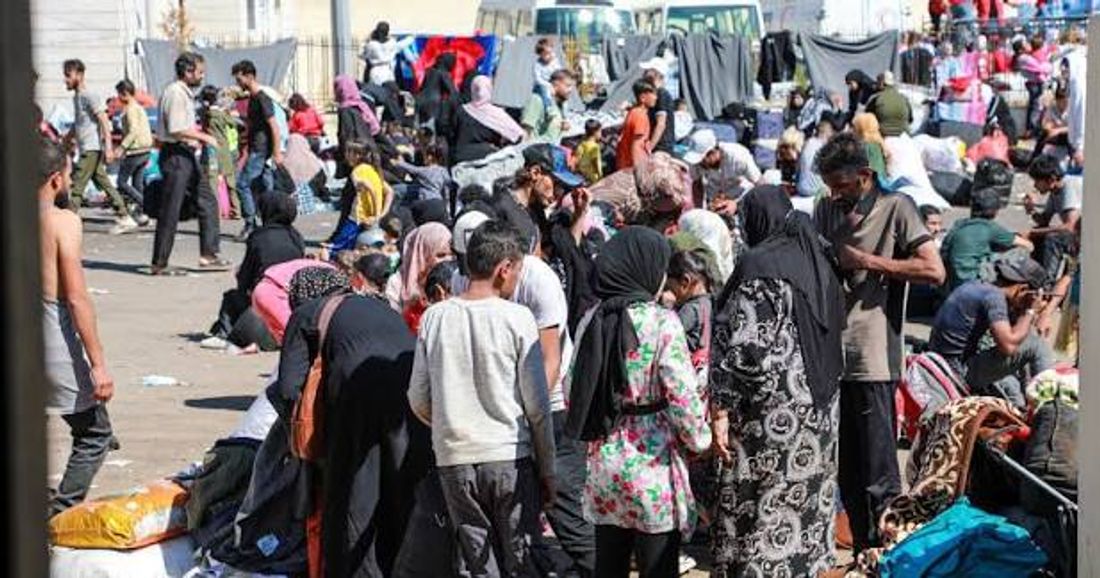
An official Lebanese source stated to the newspaper Asharq Al-Awsat that "what Lebanon is requesting from the Syrian state is cooperation to establish a mechanism for organizing the return of Syrian displaced persons, ensuring it is a programmed, organized, safe, and phased process, as Lebanon does not seek to return all displaced persons at once."
The source pointed out that among Lebanon's demands to international bodies is restricting the funding and aid received by the displaced exclusively to those returning to Syria, based on the rationale that the reasons that prompted them to leave their country no longer exist.
While the source noted that Lebanon has not yet received decisive or clear Syrian responses regarding these demands, he addressed a fundamental problem: the movement of displacement is still ongoing. He told Asharq Al-Awsat: "It is true that about 700,000 people have returned to Syria since the fall of the previous regime, but on the other hand, a large number of Syrians entered Lebanon during the same period, meaning that return figures alone do not reflect the full reality of the situation."
According to the records of the UN High Commissioner for Refugees (UNHCR), there are currently 854,633 registered Syrian refugees living in Lebanon, in addition to 12,218 refugees and asylum seekers of other nationalities.
Official figures also indicate that between December 2024 and the end of September 2026, approximately 700,000 Syrians who were registered with the UNHCR in Lebanon returned to Syria.
Since July 2005, a UN-supported voluntary return program was launched to assist Syrians wishing to return to their country. Based on this program, 23 return trips have been organized, including a convoy that departed last week from Tripoli comprising 61 returnees.
According to Dalal Harb, spokesperson for the UNHCR in Lebanon, the program provides support to those wishing to return by offering information, legal assistance, transportation, and monetary aid through official border crossings.
Returning families receive a one-time cash grant of $100 USD per returning individual to help cover the logistical arrangements associated with returning through official crossings. Some of the most vulnerable families benefit from an additional one-time grant of $300 USD per family.
Inside Syria, eligible households among the most vulnerable groups may receive cash assistance of up to $600 USD per family, based on an assessment of their circumstances and in accordance with the program's approved criteria.