New technical developments regarding the Grand Ethiopian Renaissance Dam (GERD): Are we facing a catastrophic flood?
Apr 29, 2026
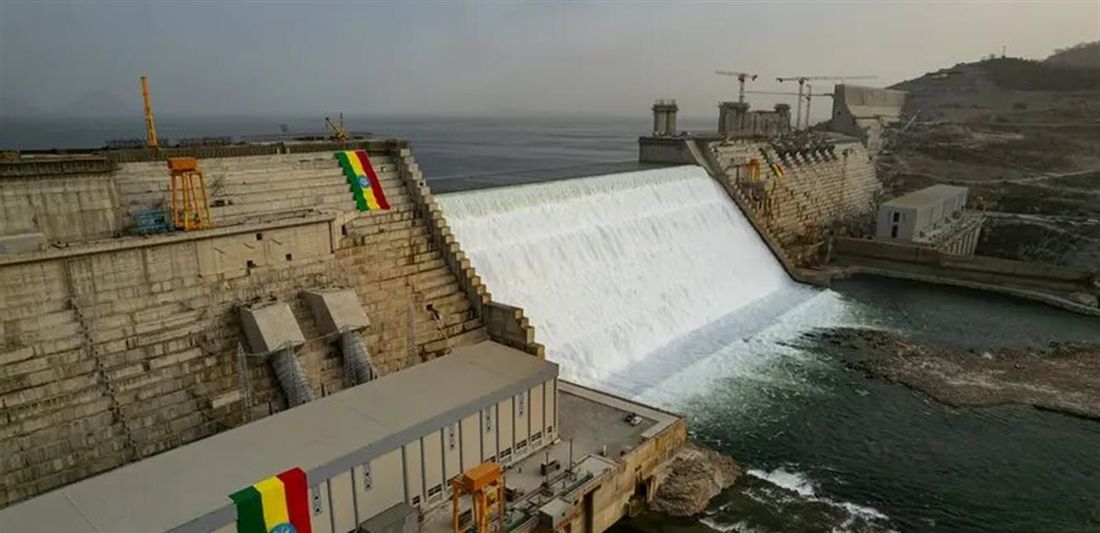
The latest satellite images of the Grand Ethiopian Renaissance Dam (GERD) reveal significant developments. Images captured by satellites on Tuesday show that the turbines have been out of service for two weeks, and the reservoir level has stabilized at 47 billion cubic meters, just two days before the start of the rainy season.
The images show the upper turbines of the dam completely shut down after a brief period of operation, while the lower turbines have remained offline since last June.
Dr. Abbas Sharaki, Professor of Water Resources at Cairo University, warned of administrative and water-related consequences that could expose downstream countries, particularly Sudan, to the risk of unprecedented flooding as the rainy season approaches.
In statements to Al-Arabiya.t/Al-Hadath.t, Sharaki explained that this shutdown has resulted in the dam's reservoir volume remaining stable at approximately 47 billion cubic meters and an elevation of 629 meters above sea level, which is only about 11 meters lower than the highest level the dam reached last September.
He also noted that the rainy season in the Blue Nile basin begins geographically on May 1st, the day after tomorrow, while the reservoir remains nearly full. He added that, with proper operation and electricity generation, the lake should have been drained to reach 20 billion cubic meters to accommodate new rainwater. However, it is currently holding 47 billion cubic meters, a situation that places immense pressure on the system, especially with expected rainfall exceeding 43 billion cubic meters in the coming months.
The water resources professor also pointed out that the current average daily water inflow is 12 million cubic meters, but it will gradually increase to 22 million in May, then jump to 60 million in June, reaching a peak in August with flows exceeding 500 million cubic meters per day.
He emphasized that the continued turbine malfunction means that every drop of water will further increase the already full lake, forcing Ethiopia to release massive and unexpected quantities later on.

Photos&Video: The funeral service of the late Haji Sukna Abed Ali Beydoun Saab in Dearborn
Airstrikes Target H0uthi-Affiliated Sites in the Capital, Sana'a
 LEBANON
 INTERNATIONAL NEWS