Lebanese newspapers today highlighted the state’s main concerns regarding ongoing international consultations to determine the final formula for the post-UNIFIL phase in southern Lebanon, following the end of the force’s mandate. No new developments have emerged in this regard, and Lebanon has not received any specific information about the progress of the consultations, reflecting the lack of any progress so far.
However, *An-Nahar* reported that preliminary indications from sources close to the French side suggest that the option of an implicit, temporary extension of UNIFIL’s mandate, followed by a gradual withdrawal over a short period not exceeding six months, remains on the table. Nevertheless, the likelihood of this option being adopted remains dependent on the US position, which has initially rejected any extension under any pretext.
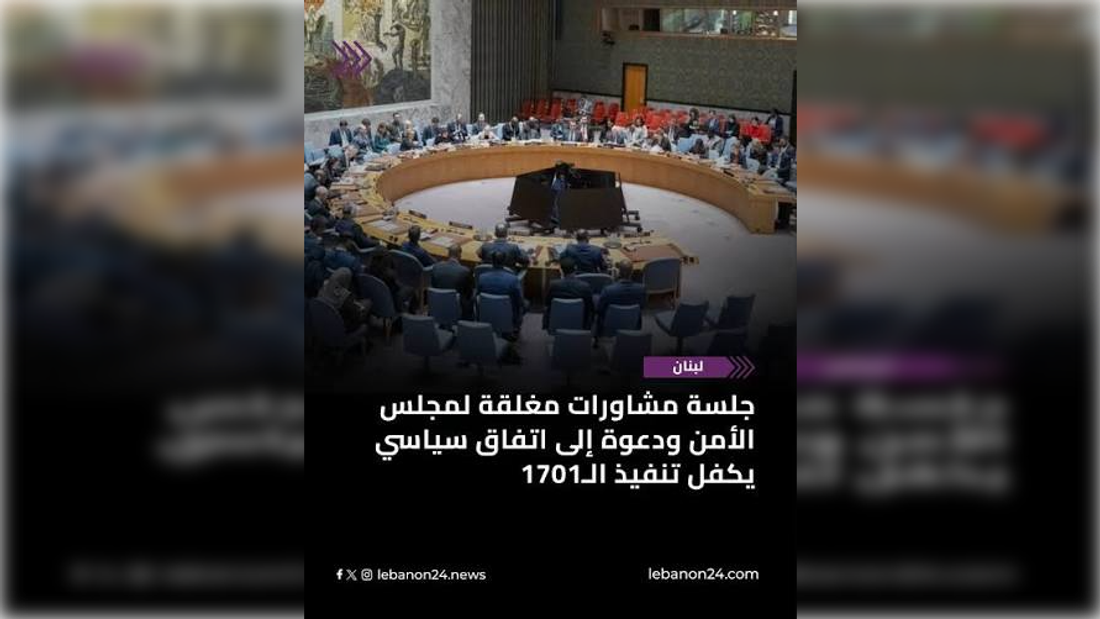
Meanwhile, *Al-Liwaa* reported that there have been no new developments in the ongoing consultations at the UN Security Council aimed at reaching a French-American-international consensus on establishing a UN force that would take over monitoring, surveillance, and reporting on the situation in southern Lebanon after UNIFIL’s mandate expires. The aim is to prevent a security vacuum that Israeli occupation forces could exploit to expand their occupation of southern areas by taking control of positions gradually vacated by international units.
However, attention is now focused on the American and Israeli positions regarding the anticipated French proposal, expected before the end of December, amid fears that it could be rejected and derailed. There is also anticipation over the positions of Russia and China, and whether they will approve the proposal, abstain from voting, or exercise their veto power.
For its part, *Al-Diyar* revealed diplomatic information about US-French meetings held on the island of Cyprus, attended by diplomatic and military officials from both sides. The discussions addressed proposed arrangements for the next phase and possible mechanisms to ensure that no security or field vacuum emerges when the international forces conclude their mission in its current form.
These developments coincided with a visit to Beirut by US Ambassador to the United Nations Mike Waltz, followed by a secret visit to Tel Aviv by a senior French official, who met with Gadi Eisenkot, the official tasked with forming the Israeli government. The discussions focused on the Lebanese file, particularly the post-UNIFIL phase and the main outlines of a French proposal concerning alternative arrangements or measures to supplement UNIFIL’s role.
The French initiative seeks to move discussions beyond the general diplomatic level and begin testing the proposed arrangements with the Israeli side, which is directly concerned with any new security framework along the border. No information has been disclosed regarding the atmosphere or outcome of the meeting.
A diplomatic source told *Al-Joumhouria* that the ongoing developments cannot be separated from Washington’s attempt to move from managing the cessation of hostilities to imposing new security arrangements, with the Lebanese Army serving as their central component. However, sufficient guarantees have yet to be provided to enable the army to fully exercise its responsibilities amid Israel’s continued occupation and attacks.
The source noted that Israel is seeking to exploit this situation to impose an equation linking its withdrawal to progress on the issue of placing all weapons under state control. Lebanon, however, insists that ending the occupation and stopping the attacks are essential conditions for completing the army’s deployment and consolidating the authority of the state.
The source added that US-French contacts are particularly significant, especially since Washington does not appear enthusiastic about maintaining UNIFIL in its current form, while Paris is seeking to establish a multinational arrangement that preserves an international presence and maintains monitoring, verification, and coordination functions.
However, the problem lies not merely in determining which forces will remain, but also in defining their mandate and ensuring their ability to document violations and prevent the imposition of a new fait accompli along the border.