Salam on the explosives seizure: no leniency... Moussawi responds: no one threatens the resistance or hints at its link to assassinations
Oct 12, 2026
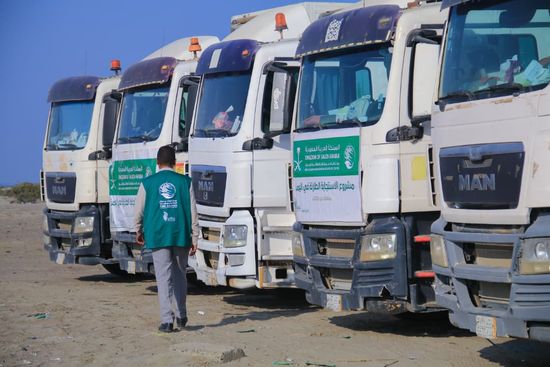
Prime Minister Nawaf Salam said during the regular ministerial meeting at the Grand Serail: no leniency and no turning a blind eye, but truth and accountability. He said it was important for him first to salute the security forces that stopped the suspicious truck, seized the explosives it was loaded with, and referred its drivers to the competent authorities for investigation. He said he understood the anxiety felt by the Lebanese at news of the truck's detention and what it was carrying, especially since C-4 was used in a number of infamous political assassinations in Lebanon's modern history.
Salam added: but from my position as prime minister, I ask all the Lebanese to be confident that we will not be lax in following up the investigation and expanding it, to identify everyone involved in this criminal operation and those behind them, uncover their plans and goals, and refer them all to the judiciary to receive the punishment they deserve. He said they could also be confident that the government would not tolerate anyone who is tempted to tamper with the country's security, safety and stability, and that it would deal with the necessary firmness with any weapon outside the framework of legitimacy, in possession, transport and use.
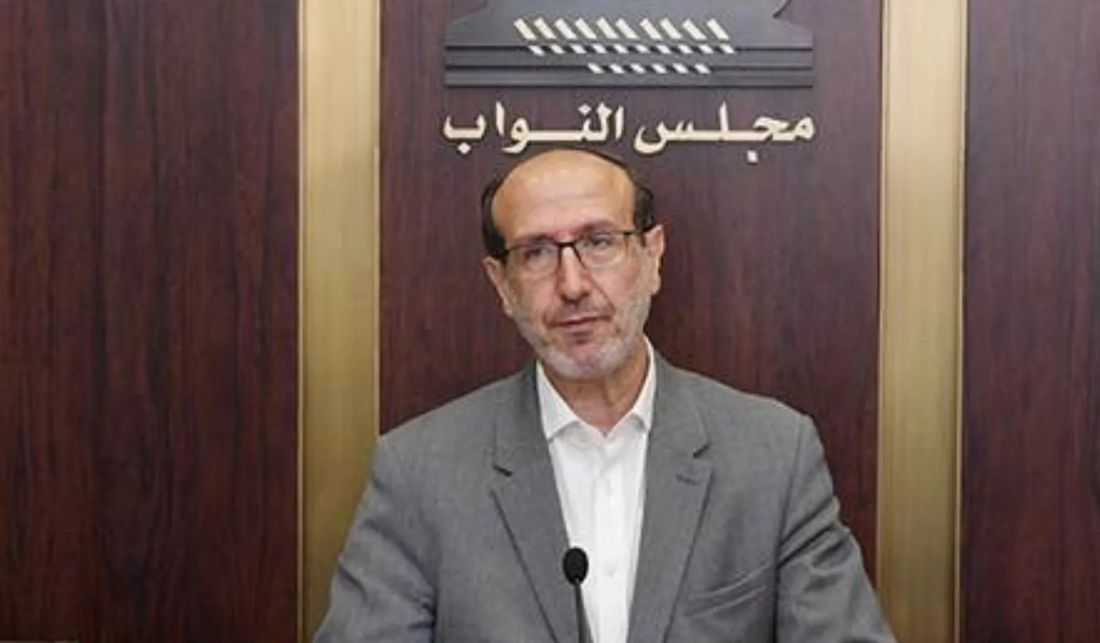
Member of the Loyalty to the Resistance bloc MP Ibrahim Moussawi responded to the positions issued on the explosives found at the Dahr al-Baidar checkpoint, particularly Prime Minister Salam's, saying: "As long as the army and the state are unable, the resistance has the right to defend itself in the face of aggression, and no one should hint at assassinations or anything else."
Moussawi added: "If it is true that this vehicle belongs to the resistance, let everyone know that the resistance is not ashamed or embarrassed, and does its duty before everyone, in broad daylight."
He continued: as long as Israeli attacks continue and Israeli forces remain on Lebanese territory, and as long as the government and army cannot confront them, because of the army's lack of arming and the absence of a political decision, self-defense is a natural right of the resistance, which he said it derives from the UN Charter and its covenants and human rights charters.
Moussawi rejected threats and hints of a link to assassinations, saying: "Let no one try to threaten, utter unacceptable words, or pin accusations and hint at a relationship to assassinations or anything else."
He described the resistance's history as "clear, bright and honorable," saying that when it was in a position of strength and capability, it did not enter a civil war or employ its power in internal conflicts and problems. He added that it understands that Lebanon's strength lies in its immunity and internal unity and in preventing a slide into strife.
He said citizens and the resistance have the right to make every effort to defend Lebanon, prevent Israeli forces from consolidating their positions or expanding, and make their stay more difficult, up to liberation.
Moussawi asked the government and the state what the agreements had achieved, noting that the resistance agreed to some and publicly rejected others. He considered that the agreements concluded by the state did not prevent attacks and destruction, and that the bulldozing and destruction after the framework agreement were, by his account, far greater than what happened during the confrontations with Israel.
He added: "The state cannot condemn and prosecute people while the Israeli aggression continues and Israeli forces are still on Lebanese territory, and it has not been able to do anything about that," describing the turn toward internal accusations in these circumstances as "shameful and disgraceful to the state and the government."
Moussawi cited what is happening in the West Bank, saying Israeli attacks continue despite the agreements and the cooperation shown by the Palestinian Authority led by Mahmoud Abbas. He asked: "If the problem is the resistance, why is this happening with Mahmoud Abbas?"
He also called for drawing lessons from Syria, saying Israeli forces had reached Arna the previous day, which he described as an hour and a quarter from the presidential palace, and considering that Syria had not initiated any action against Israel and that there is no pretext Israel can invoke for its attacks and expansion inside Syrian territory.
He addressed the agreements with Jordan and Egypt, considering that they had become "a source of blackmail," and said the existing reality cannot be denied or confronted by preventing people from defending themselves.
Moussawi concluded by affirming that the resistance, according to his position, is exercising a "legitimate national right, internationally, by charter and naturally," calling on the state to review its calculations and work to strengthen national and internal unity, and to abandon accusations that he said "will not repel an Israeli aggression, will not preserve national unity, and will not increase immunity."