Settlement in the West Bank: an old project accelerating to impose new facts on the ground
Oct 11, 2026
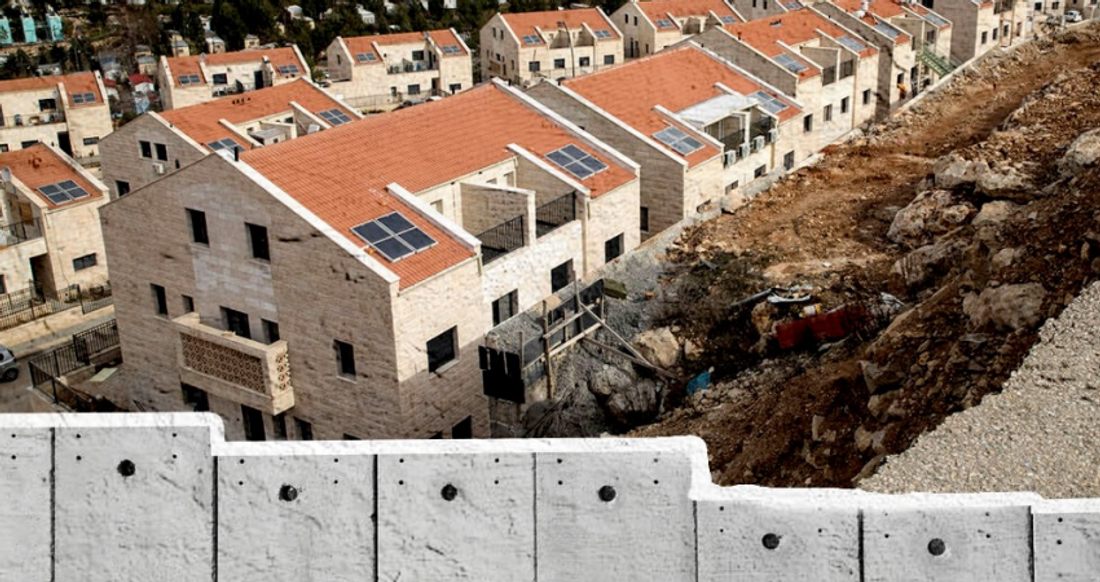
October 7, 2023 marked a turning point in the reality of the occupied West Bank, as the period that followed saw an escalation in Israeli settlement activity, alongside growing settler attacks on Palestinians, their property and their farmland.
This escalation was not limited to expanding existing settlements or pushing forward new construction plans. It extended to establishing outposts, seizing additional areas of land, and restricting Palestinians' access to their land and sources of livelihood, as well as rising violence targeting residential communities, particularly in rural and Bedouin areas.
Data issued by UN and human rights institutions, along with specialized Palestinian and Israeli reports, reveal the widening scope of settlement expansion and related attacks in the years following October 7, in a trajectory that goes beyond temporary changes on the ground to reshaping the geographic and demographic reality of the West Bank.
Unprecedented settlement expansion
A report issued by the Office of the European Union Representative in the West Bank and Gaza Strip on July 6, 2026 revealed an unprecedented escalation in Israeli settlement activity during 2025, in a course aimed at expanding control over Palestinian land and imposing new facts on the ground.
According to the report, the number of Israeli settlers exceeded 750,000, spread across 147 settlements, while the Israeli government approved the establishment of 54 new settlements during 2025, excluding East Jerusalem, the highest annual figure since 1967.
About 86 outposts were also established, alongside plans to build 40,064 housing units between 2023 and 2025, expected to accommodate between 160,000 and 200,000 additional settlers.
In a related context, the Israeli government signed a contract on July 14, 2026 worth 8.5 billion shekels to build 12,000 new housing units, according to the report.
The expansion was not limited to residential construction, but extended to land control through so-called pastoral settlement, which relies on establishing settler farms used to dominate the surrounding land and restrict Palestinians' access to it.
According to the same source, the area of land effectively under settler control exceeded 1.07 million dunams, equivalent to about 18% of the West Bank's area, after roughly 300,000 dunams were added during 2025.
The Israeli government also declared about 25,959 dunams as state land between 2023 and 2025, equivalent to nearly half of all the areas declared state land since the signing of the Oslo Accords in 1993, according to the report.
This was accompanied by the paving of 223 kilometers of new settlement roads and the advancement of the E1 settlement project, through approval of 3,401 housing units, in addition to allocating billions of shekels to infrastructure and building the so-called "Sovereignty Road."
According to the source, this road is expected to cut off about 3% of the West Bank's area from Palestinians, while strengthening geographic connectivity between settlements.
These figures reflect the coincidence of settlement construction with land seizure and infrastructure development, contributing to changing the West Bank's geographic and demographic map and limiting spatial contact between Palestinian communities.
Escalating attacks and widening targeting
In parallel with settlement expansion, settler attacks on Palestinians and their property escalated. The UN Office for the Coordination of Humanitarian Affairs (OCHA) documented 1,828 settler attacks during 2025, which resulted in deaths, injuries or property damage in about 280 Palestinian communities, compared with 1,420 attacks in 2024 and 1,189 in 2023. This is the highest annual total since the office began monitoring such attacks in 2006.
The office's data indicate that attacks continued at a high rate in 2026, as it documented more than 1,600 attacks from the beginning of the year until September 14, including incidents that resulted in Palestinian injuries, property damage, or both.
According to this data, the average was about 6.7 attacks per day during the period mentioned, and they affected 275 Palestinian communities in different areas of the West Bank, reflecting their wide geographic scope and the fact that they are not limited to specific villages or communities.
The attacks continued during the second half of September, as the office documented more than 50 attacks during the period from September 22 to 28, 2026, resulting in Palestinian injuries, property damage, or both.
These figures point to the continuation of attacks until late September, in a context where field violence overlaps with settlement expansion and restrictions on Palestinians' access to their land and property.
Bashar al-Qaryouti: the period after October 7 saw an acceleration of attacks
Bashar al-Qaryouti, a specialist in resisting settlement, affirms that settler attacks in the West Bank did not begin after October 7, 2023, but preceded that date and formed part of a continuous course of seizing land and imposing new facts by force.
Al-Qaryouti said in a press interview that the period following October 7 saw an acceleration in the pace of attacks and a widening of their scope, taking advantage of the world's preoccupation with the war on Gaza, which allowed pressure on Palestinian communities to intensify and their residents to be pursued on their land and at their sources of livelihood.
He adds that the danger of these attacks lies not only in injuries and destruction of property, but also in their cumulative results: preventing farmers from reaching their land, seizing pastures and water sources, and pushing families to leave under the weight of fear and threat.
He continues that the coincidence of repeated attacks with the establishment of outposts and the expansion of control over surrounding land may turn individual incidents into a tool for changing the geographic and demographic reality and reducing Palestinians' ability to remain in their areas.
Al-Qaryouti stresses that understanding what is happening requires linking the attacks with land confiscation and settlement expansion, rather than treating them as separate events, affirming that the essence of the conflict is not only about a piece of land, but about the Palestinians' right to remain on it.
He concludes that every community that is displaced, and every piece of land whose owners are denied access to it, opens the way to entrenching facts that will be hard to reverse in the future, stressing that documentation, accountability and protecting the steadfastness of Palestinian communities are essential elements in confronting this course.
Abu al-Ads: settlement is an ideological project that goes beyond individual attacks
For his part, Azzam Abu al-Ads, an observer of Israeli affairs, sees what is happening in the West Bank as something that cannot be understood as a passing wave of attacks imposed by post-October 7 circumstances, but as an extension of an older ideological and political project that views the land as an exclusive right of the Jews and treats the Palestinian presence as an obstacle to completing control over it.
Abu al-Ads had previously warned of the settler's transformation from a mere resident of a settlement into an ideological and field actor seeking to expand the scope of control, pointing to growing military training among groups of settlers and the so-called "hilltop youth."
Abu al-Ads says the danger of this mindset is that it does not separate settlement from violence: an outpost that begins with a caravan or a pastoral farm can turn into a pivot point for controlling vast areas, while repeated attacks and restrictions on Palestinians' access to their land help create an environment that drives residents to leave.
He adds that these practices intersect with declared positions of Israeli settler and political leaders who call for imposing sovereignty over the West Bank and reject the establishment of a Palestinian state, giving the reading of the settlement expansion's political goals a basis that goes beyond inference from field facts alone.
Abu al-Ads concludes that October 7 was not the beginning of the settlement project, but a stage during which attempts to entrench new facts on the ground accelerated.
He stresses that the challenge is not limited to documenting attacks after they occur, but includes understanding the link between ideology, political decision-making and field settlement moves, warning that the likely result is not limited to expanding settlements, but extends to reshaping Palestinian geography and undermining the prospects of a contiguous, viable Palestinian state.
UNIFIL Commander on the 83rd Anniversary of Lebanon's Independence: We Reaffirm Our Commitment to Supporting the Lebanese Army to Make South Lebanon Safer and More Stable
Al-Maghazi under the guillotine of demolition: A silent Israeli military advance consumes the heart of the camp and displaces its residents.