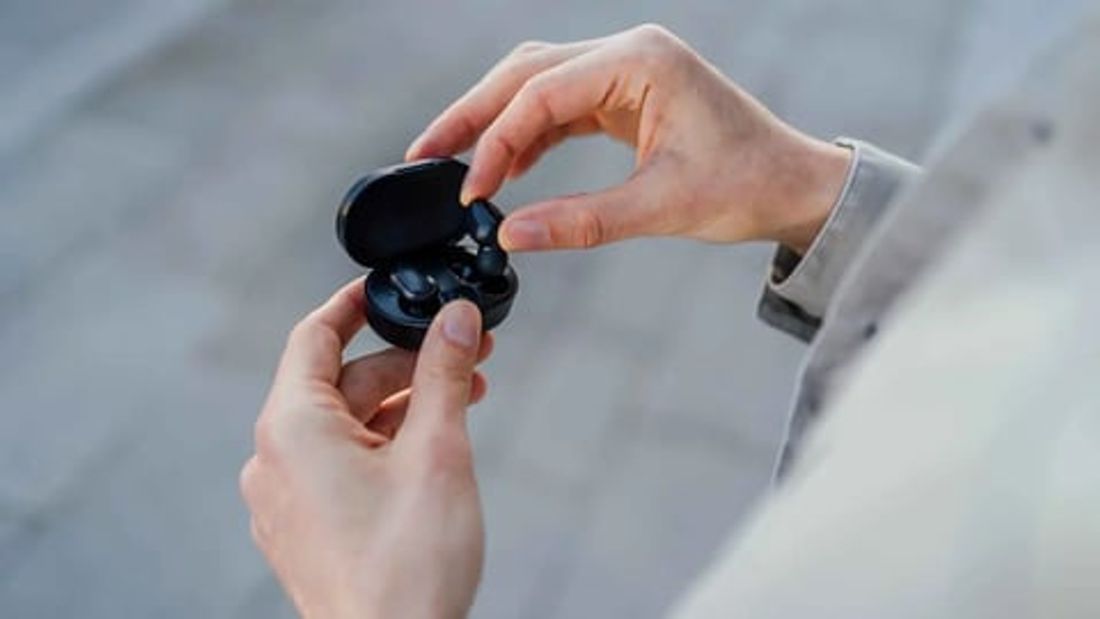
Recent medical reports issued by leading healthcare institutions, including the Mayo Clinic and Cleveland Clinic, have warned of the hidden risks associated with prolonged daily use of in-ear headphones. They emphasized that continuous exposure to high sound levels can lead to permanent sensorineural hearing loss, which cannot be reversed.
Medical data indicate that sound is measured in decibels (dB), and exposure becomes potentially harmful to the ears when it exceeds 85 decibels. This is roughly equivalent to the noise of heavy traffic or a household blender. Repeated exposure at this level can damage the tiny hair cells inside the inner ear's cochlea, which are responsible for converting sound waves into nerve signals that the brain can interpret.
The risk increases significantly when sound levels reach 100 decibels or higher, as damage can occur within just a few minutes.
Early warning signs include common symptoms such as persistent ringing in the ears (tinnitus), a feeling of muffled hearing, difficulty distinguishing high-pitched sounds, and trouble following conversations in crowded environments.
The damage is not limited to hearing problems. It can also include bacterial infections and irritation of the ear canal due to poorly fitting earbuds or inadequate regular cleaning. These effects are particularly concerning among children and adolescents, as hearing impairment can be associated with academic difficulties and challenges in social communication.
To prevent these potentially irreversible complications, experts recommend keeping the volume between 50% and 60% of the device's maximum capacity and limiting listening time to less than 90 minutes per day when the volume is set at 80%.
They also recommend activating the noise-canceling feature to block out external sounds and avoid the need to turn up the volume, keeping earbuds properly sanitized, and consulting a specialist immediately if any decline in hearing quality is noticed.
𝗦𝗼𝘂𝗿𝗰𝗲: 𝗘𝗿𝗲𝗺 𝗡𝗲𝘄𝘀