The start of the new season was supposed to offer an opportunity for teams and their supporters to reunite, particularly after an intriguing period of preparations. However, the scenes at some stadiums have reflected a different reality. The desire to watch matches is no longer enough, on its own, to persuade fans to leave their homes and head to the stadium, as living conditions increasingly force many Lebanese to prioritize other needs.
It is true that attention usually focuses on major clashes between teams competing for the title, where larger crowds are expected to fill the stands and restore the familiar atmosphere of fan support. Yet the more important questions remain: Why are fans absent from other matches? And why are some teams no longer able to attract large numbers of supporters, even when playing at home?
The Cost-of-Living Crisis Strikes Again
The answer may first be found in the case of Al Ansar, the league champions for the past two seasons. This team has traditionally relied on a large fan base and enjoyed strong support at stadiums across the country. However, some of its own players were surprised by the absence of a significant portion of their supporters during their opening matches. This suggests that the issue is not simply related to the importance of a match or a team's performance, but rather to a broader crisis extending far beyond the football pitch.
Difficult living conditions are forcing football fans to prioritize other needs.
In a country struggling under mounting economic and living pressures, the cost of attending a football match is no longer a minor expense for families and young people. Transportation alone has become an additional burden, with the price of a 20-liter gasoline can reaching around $30. This makes travelling from one area to another to support a favorite team a decision that requires careful consideration, particularly for fans who have to cover long distances.
Al Akhbar spoke to several supporters over the weekend on the sidelines of the fifth round of the league.
Ahmad, a fan from Tripoli who travelled to Jounieh to watch his northern city's team take on Al Hikma, said that the desire to attend matches remains, but current circumstances no longer allow him to do so as often as before.
"The cost of the journey is no longer insignificant. When you calculate the price of gasoline for the round trip, along with other expenses, you find yourself having to think twice before making the decision. We love our team, but we also have commitments that cannot be ignored," he explained.
Karim, another Tripoli supporter, believes the problem is not limited to the higher ticket prices this season, but begins before fans even reach the stadium.
"For us, a match is not just an admission ticket. There are transportation and food costs, and sometimes additional expenses. If you are going with your family, the cost becomes even higher. So we may prefer to watch the match at home, even though we miss the atmosphere in the stands," he added.
Meanwhile, Samer, an Al Hikma supporter, pointed out that daily pressures are draining people's attention and energy.
"Some people are thinking about providing for their families, while others are worried about their jobs or monthly expenses. Football remains important to us, but it may not be a priority for some when there are more urgent matters to deal with. That is why I find that Al Hikma supporters, for example, turn out in greater numbers in Jounieh than at any other stadium," he said.
Waiting for the Competition to Heat Up
Alongside economic factors, some may explain the decline in attendance by pointing out that the league is still in its early stages. Supporters of certain teams may not yet feel that their presence in the stands will make a decisive difference to their teams' campaigns. This situation could change as the competition intensifies, crucial matches approach, and points become increasingly important in determining the champions and the teams at risk of relegation.
Between those who choose to watch their teams on television to save money and those who prefer to spend what remains of their income on their families' needs, the number of supporters attending matches may decline. This does not necessarily mean that their loyalty to their clubs has weakened, and that is certainly worth emphasizing.
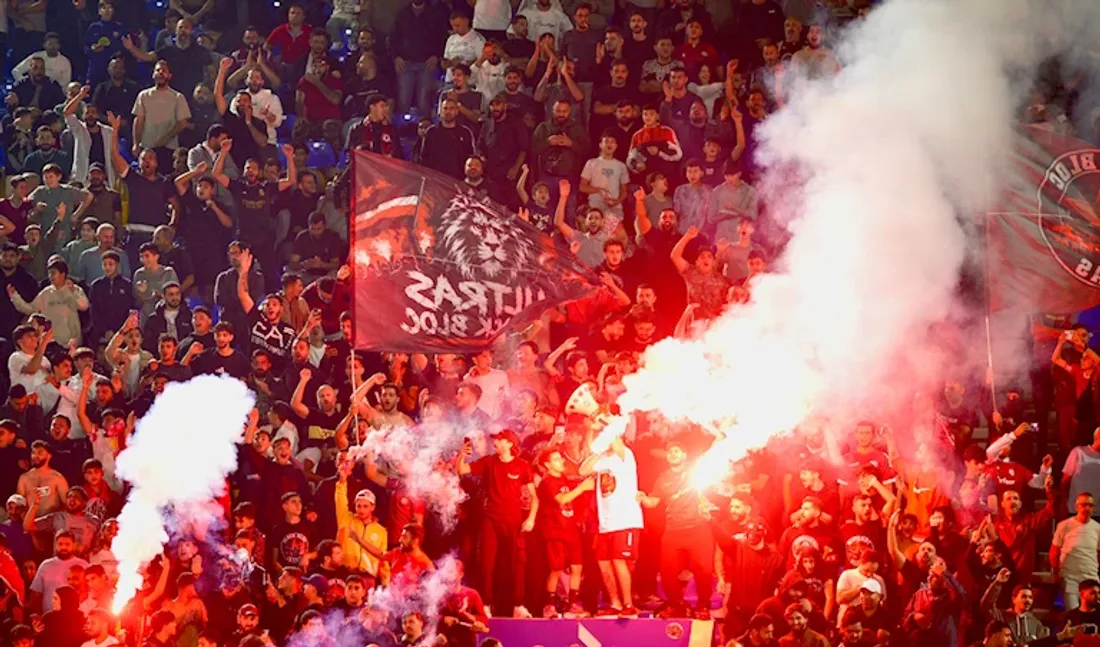
What is even more certain, judging by the Jwaya versus Nejmeh encounter, is that major clashes will always bring excitement and noise back to the stands. However, clubs should also work to mobilize their supporters and organize attendance by offering certain incentives. Their success should not be measured solely by what they achieve on the pitch, but also by the number of fans who follow them, helping keep football part of people's lives, even in the most difficult circumstances.
𝗦𝗼𝘂𝗿𝗰𝗲: 𝗔𝗹 𝗔𝗸𝗵𝗯𝗮𝗿