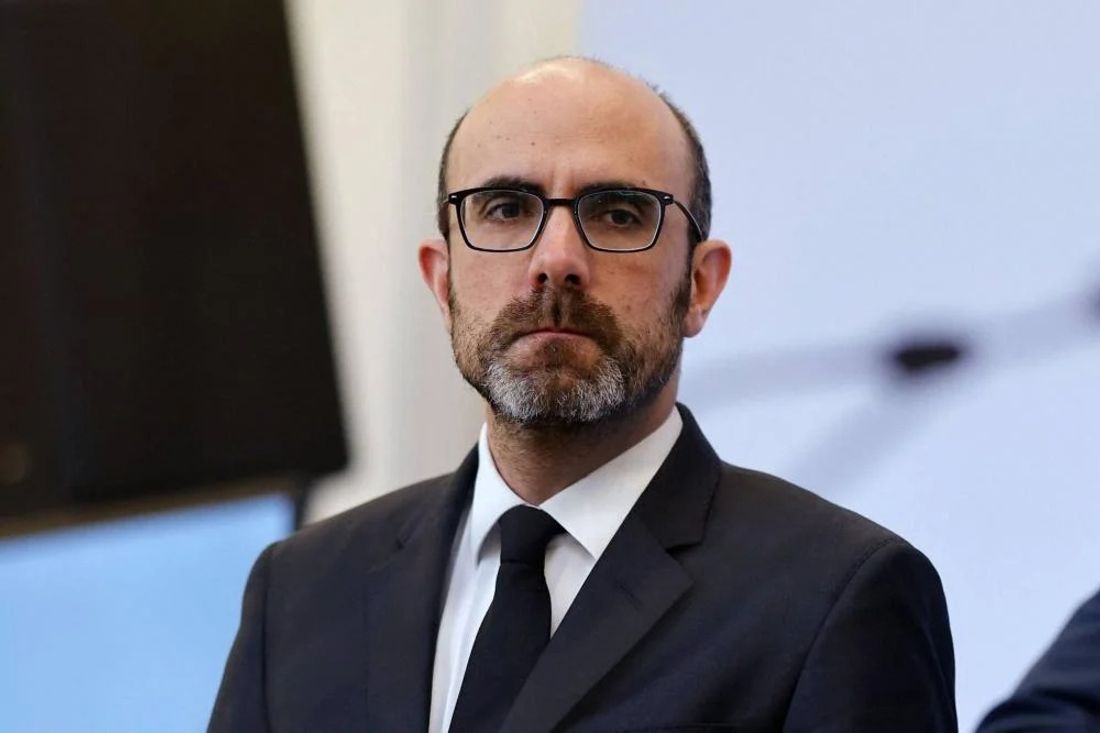
Al-Akhbar newspaper revealed that the head of French Foreign Intelligence, Nicolas Lerner, made a lightning visit to Lebanon yesterday, his first since his appointment to his position last December.
Lerner's appointment was a double surprise as he came from French internal intelligence, and as he replaced veteran ambassador Bernard Emier following the latter's return from a Middle Eastern tour after the outbreak of the Gaza war. His visit to Lebanon was primarily exploratory, as he met with security officials on an acquaintance visit to an arena in which France is interested in security and intelligence, and in which cooperation is carried out with the Lebanese army on several files.
However, informed sources confirm that the mission of Lerner, who is close to President Macron, cannot be limited to a purely military and intelligence framework, especially at this time that the region is experiencing. Note that there are many areas of French-Lebanese research related to the army, in terms of its spread to the south according to any new arrangement that is worked on, and the reactivation of the European and Arab assistance program for the army.
According to the information, Lerner researched in Lebanon two main topics related to the Gaza war and its interactions in Lebanon and the region:
The first is the situation in the south and the military developments there, and within the broader framework of the ongoing diplomatic work in the Middle East, including the tour of US intelligence chief William Burns to reach a ceasefire, and the possibility of this impacting Lebanon. Related to this, is the fate of Lebanon’s response to the French paper and what it can agree to to arrange the situation of the south and deal with the French proposals positively to move to an operational stage. Note that the visit of the French official was preceded by another visit by a French security official, which was limited to the situation of the French forces and the military situation in the south, in addition to the repercussions of what is happening on the international forces operating in the south.
Second, combating terrorism within the framework of coordination between Lebanon and France, as the Lebanese agencies have long relied on exchanging information with France on the terrorism file. The Lebanese security officials presented to their French guest the Lebanese work in the field of dismantling terrorist networks, and the features of the reactivation of some terrorist cells after a stagnation that lasted for about two years in some security spots that recently witnessed the dismantling of a number of cells and networks.
The topic of the Syrian displacement was not absent from the talks, especially from the Lebanese parties that made their guest aware of the dangers of this file and its repercussions on Lebanon, and proposed the assistance of France and the European Union in confronting the burdens of this displacement and mitigating its effects on Lebanon. Note that Lebanon is dealing with this issue as a priority, while European countries are still dealing with it with caution and on the basis of keeping the displaced where they are and controlling illegal immigration to them. With a slight difference that began to appear in Mediterranean countries, they began to sense the same risks and understand Lebanon's needs and concerns.