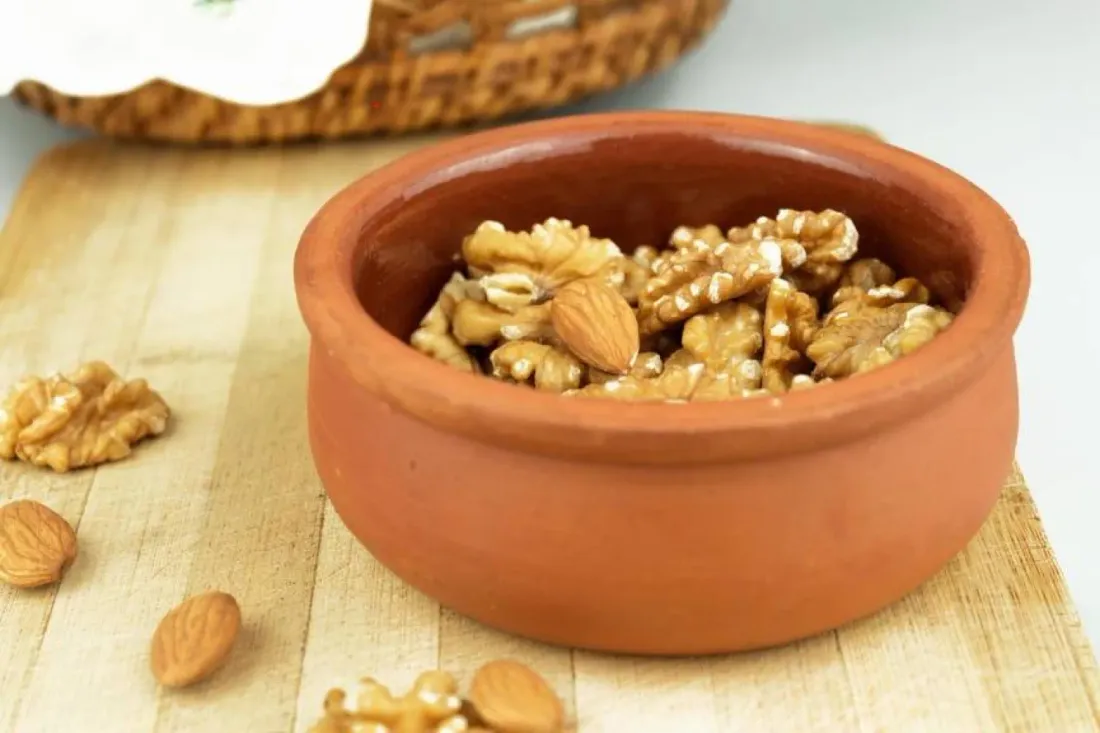
Both walnuts and almonds can support heart health thanks to their healthy fats and beneficial nutrients. However, determining which is the better choice depends on each person’s health goals, whether that means lowering cholesterol levels, regulating blood pressure, or reducing inflammation.
𝗪𝗮𝗹𝗻𝘂𝘁𝘀 𝗔𝗿𝗲 𝗥𝗶𝗰𝗵𝗲𝗿 𝗶𝗻 𝗢𝗺𝗲𝗴𝗮-𝟯 𝗙𝗮𝘁𝘁𝘆 𝗔𝗰𝗶𝗱𝘀
Walnuts are considered one of the most beneficial nuts for heart health because they contain high levels of omega-3 fatty acids, particularly alpha-linolenic acid (ALA), a plant-based form of omega-3.
These fatty acids play an important role in reducing inflammation and supporting cardiovascular health.
A one-ounce (28-gram) serving of walnuts contains approximately 2.5 grams of alpha-linolenic acid.
Walnuts are also rich in antioxidants, such as polyphenols, which may help combat oxidative stress, an imbalance between harmful free radicals and antioxidants that neutralize them.
𝗔𝗹𝗺𝗼𝗻𝗱𝘀 𝗔𝗿𝗲 𝗥𝗶𝗰𝗵 𝗶𝗻 𝗛𝗲𝗮𝗹𝘁𝗵𝘆 𝗙𝗮𝘁𝘀 𝗮𝗻𝗱 𝗡𝘂𝘁𝗿𝗶𝗲𝗻𝘁𝘀
Almonds are particularly rich in monounsaturated fats, which are associated with important heart-health benefits.
They also contain vitamin E and dietary fiber, both of which can help reduce oxidative stress associated with the development of heart disease.
Almonds also provide a range of essential minerals, including calcium, potassium, phosphorus, and magnesium, along with beneficial plant compounds such as flavonoids, plant sterols, and phenolic acids.
Magnesium, in particular, plays an important role in supporting blood vessel health and helping regulate blood pressure.
𝗛𝗼𝘄 𝗪𝗮𝗹𝗻𝘂𝘁𝘀 𝗮𝗻𝗱 𝗔𝗹𝗺𝗼𝗻𝗱𝘀 𝗔𝗳𝗳𝗲𝗰𝘁 𝗕𝗹𝗼𝗼𝗱 𝗣𝗿𝗲𝘀𝘀𝘂𝗿𝗲 𝗮𝗻𝗱 𝗖𝗵𝗼𝗹𝗲𝘀𝘁𝗲𝗿𝗼𝗹
𝗕𝗹𝗼𝗼𝗱 𝗣𝗿𝗲𝘀𝘀𝘂𝗿𝗲
A study in which participants consumed walnuts daily while reducing their intake of saturated fat found a reduction in central blood pressure.
Central blood pressure refers to the pressure within the ascending aorta and is considered one of the indicators associated with the risk of heart disease and stroke.
Studies have also linked almond consumption to lower blood pressure, which may contribute to better heart health and a reduced risk of cardiovascular disease.
These benefits are believed to stem from the monounsaturated fats and minerals found in almonds, particularly magnesium and potassium.
𝗖𝗵𝗼𝗹𝗲𝘀𝘁𝗲𝗿𝗼𝗹
A study found that healthy older adults who consumed half a cup of walnuts daily for two years experienced a reduction in LDL, or “bad,” cholesterol, including certain types associated with heart disease.
A single serving of walnuts also contains around 2 grams of dietary fiber, which may help improve cholesterol levels.
Meanwhile, multiple studies have examined the effects of almonds on blood lipid levels, including cholesterol and triglycerides.
The findings suggest that almond consumption may reduce total cholesterol by up to 25% and LDL cholesterol by up to 35%, according to some research findings. These percentages do not mean that the same results can be expected in everyone.
Studies have also indicated that almonds may help increase or maintain levels of HDL, or “good,” cholesterol.
HDL plays an important role in transporting LDL cholesterol away from the arteries to the liver, where it is broken down and eliminated.
𝗪𝗵𝗶𝗰𝗵 𝗜𝘀 𝗕𝗲𝘁𝘁𝗲𝗿 𝗳𝗼𝗿 𝗛𝗲𝗮𝗿𝘁 𝗛𝗲𝗮𝗹𝘁𝗵?
The answer depends on the specific health benefit a person is seeking.
- 𝗪𝗮𝗹𝗻𝘂𝘁𝘀 𝗳𝗼𝗿 𝗢𝗺𝗲𝗴𝗮-𝟯 𝗮𝗻𝗱 𝗥𝗲𝗱𝘂𝗰𝗶𝗻𝗴 𝗜𝗻𝗳𝗹𝗮𝗺𝗺𝗮𝘁𝗶𝗼𝗻: They are the better choice for those looking to increase their intake of plant-based omega-3 fatty acids and benefit from their anti-inflammatory properties, as almonds contain lower amounts of these fatty acids.
- 𝗔𝗹𝗺𝗼𝗻𝗱𝘀 𝗳𝗼𝗿 𝗛𝗲𝗹𝗽𝗶𝗻𝗴 𝗥𝗲𝗴𝘂𝗹𝗮𝘁𝗲 𝗕𝗹𝗼𝗼𝗱 𝗣𝗿𝗲𝘀𝘀𝘂𝗿𝗲: They may be a suitable option for those looking to increase their intake of magnesium and potassium, which help maintain healthy blood vessels and regulate blood pressure.
- 𝗔𝗹𝗺𝗼𝗻𝗱𝘀 𝗳𝗼𝗿 𝗜𝗺𝗽𝗿𝗼𝘃𝗶𝗻𝗴 𝗖𝗵𝗼𝗹𝗲𝘀𝘁𝗲𝗿𝗼𝗹 𝗟𝗲𝘃𝗲𝗹𝘀: Some studies suggest that almonds may have a slight advantage in lowering LDL cholesterol and maintaining HDL cholesterol levels, thanks to their high content of monounsaturated fats.
Ultimately, both walnuts and almonds can be incorporated into a heart-healthy diet, as each provides different and complementary nutritional benefits.
Varying between the two, rather than relying exclusively on one type, may be a good way to benefit from the nutrients they provide.
𝗦𝗼𝘂𝗿𝗰𝗲: 𝗔𝗮𝘄𝘀𝗮𝗮𝘁