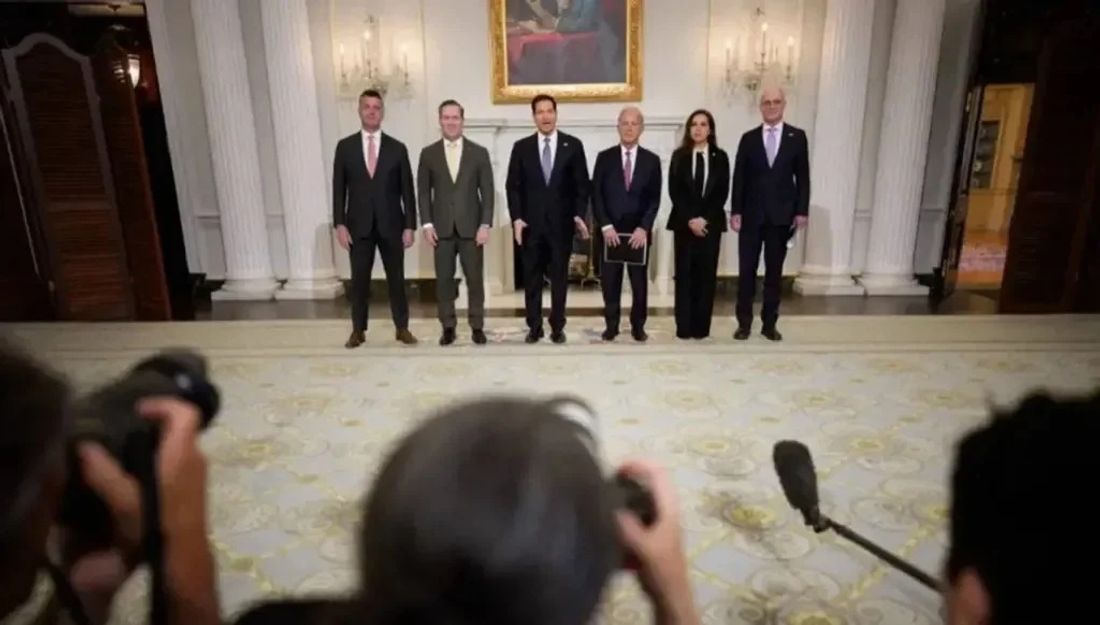
Al-Liwaa newspaper reported that preparations are intensifying for a new round of negotiations between Lebanon and Israel, with US participation, before the end of this year. This would be the eighth round between the two sides.
According to the Israeli newspaper Haaretz, the round will focus on finding a third party to oversee the implementation of the pilot program, which calls for the gradual withdrawal of the Israeli army from areas in southern Lebanon, allowing the Lebanese army to deploy there.
A key source acknowledged that the previous round of negotiations, which was limited to military negotiators at the US Central Command headquarters in Tampa, Florida, failed to produce tangible results. The Israeli newspaper did not conceal the fact that the upcoming round is taking place amid serious disagreements over the mechanism for verifying implementation of the pilot program. The newspaper quoted an Arab diplomatic source familiar with the negotiations as saying that the pilot program had so far failed, alleging that the Lebanese army had been unable to disarm Hezbollah in the agreed-upon areas.
In the same context, Al-Jadeed TV reported, citing information from Washington, that recent Saudi and Qatari diplomatic efforts with the US administration had resulted in a move by Secretary of State Marco Rubio to invite Lebanon and Israel to a new meeting at the State Department in Washington, rather than in Italy or Tampa this time. The meeting would assess the course and outcome of previous negotiations and discuss the possibility of resuming them.
The US State Department may begin contacting Lebanon and Israel next week, following the Thanksgiving holiday, which begins today, to set a specific date for the meeting. Reports have also circulated about US efforts to provide economic support to Lebanon in the near future.
Al-Diyar newspaper quoted diplomatic sources as saying that Washington is awaiting the formation of Israel's new government before holding an assessment meeting between Lebanese and Israeli delegations at the US State Department to review the course of negotiations.
There is also anticipation surrounding the outcome of Prince Yazid bin Farhan's visit to Washington, which coincides with a phone call between US Secretary of State Marco Rubio and his Saudi counterpart, Faisal bin Farhan, part of which was devoted to the Lebanese file. The US State Department confirmed that the two sides had agreed on the importance of disarming Hezb0llah in Lebanon under the trilateral framework agreement.
According to the information, US-Saudi coordination on the Lebanese file has intensified and become more hardline, with efforts unified to demand that the Lebanese state take new security and judicial measures to broaden implementation of the disarmament decision.
The demands include expanding the Lebanese army's deployment north of the Litani River and taking firm action against any Hezb0llah military activity under a clearly defined timetable in areas considered strongholds of the party, including Beirut's southern suburbs and the Bekaa Valley, while abolishing any field exemptions previously granted.
On the judicial front, the demands call for no compromises, maintaining the case of the five detainees in the mountainous areas of Batroun and Bsharri within the existing judicial framework, and pursuing investigations and prosecutions against Hezbollah officials to their conclusion. They also call for revisiting, in the near future, the referral of the Dhahr al-Baydar explosives case to the Judicial Council.
These developments are causing concern in Ain al-Tineh, with behind-the-scenes efforts underway to prevent the country from being drawn into a crisis that could spiral out of control.
Meanwhile, Asharq Al-Awsat newspaper quoted an unnamed US diplomat in Beirut as saying that placing all weapons under state control remains the key to Israel's withdrawal, and that Washington has always stood by efforts to keep Beirut and its southern suburbs neutral and prevent Israel from targeting them.
Lebanon therefore faces an equation based on linking the exclusive control of weapons by the state to Israel's withdrawal. This also constitutes the general framework for the international force that will replace UNIFIL, which will have the backing of the UN Security Council and an agenda combining the Framework Agreement with UN Security Council Resolution 1701.