Ann Arbor group wants to take electric grid from DTE. It wouldn't be easy
Oct 12, 2026
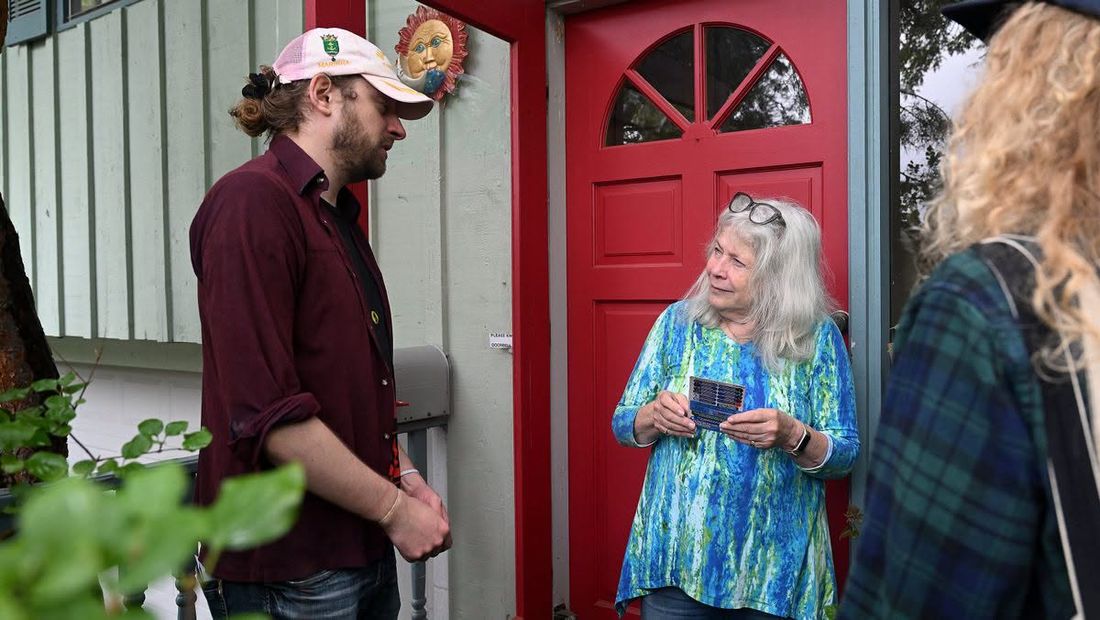
ANN ARBOR — The effort to remove the city of Ann Arbor from DTE Energy Co.'s service territory was inspired by city leaders' ambitious 2019 commitment to eliminate Ann Arbor's carbon emissions by 2030.
But what started as a movement to address climate change in a progressive, well-heeled community has evolved into an unprecedented effort to wrest electric service from a business and political powerhouse and into a symbol of Michigan residents' frustration with rising energy prices, power outages and investor-owned utilities.
"The disinvestment in the city's and the whole region's poles and wires and the lack of reliability became more and more apparent" after the Ann Arbor for Public Power movement launched in 2020, said Brian Geiringer, executive director of Ann Arbor for Public Power, also known as A2P2.
"There was a huge storm in 2021. There was another one in 2023. People are in the middle of winter without power. The founders of A2P2 found these converging reasons to go forward with this campaign."
Six years in, the Ann Arbor for Public Power movement scored a significant milestone. The campaign gathered enough signatures to get a proposal on the November ballot to establish an Ann Arbor Municipal Electric Utility Board. If enough voters approve Proposal E, the board will be charged with studying, then preparing to acquire assets and establish a municipal utility.
But the ballot issue faces headwinds. The complicated legal process of detangling from DTE has been questioned by some prominent local environmentalists and most of Ann Arbor's City Council, which voted on a resolution this past week to oppose the measure.
Many council members pointed to the proposal's use of the word "shall," arguing it would lock the city into too many commitments, such as authorizing spending recommended by the municipal power board.
"Ambiguity in our charter is another concern," council member Ayesha Ghazi Edwin said at the Oct. 5 meeting. "Our charter should clearly state who has the authority to borrow money. ... Questions of this magnitude should not be left open to competing interpretations."
For its part, DTE said taking over the electric grid would be expensive and touted the work the company recently has undertaken in the city.
"The proposal to take over Ann Arbor's electric grid will cost the City of Ann Arbor nearly $1 billion on day one, leading to skyrocketing costs for Ann Arbor businesses and residents," said a DTE statement sent via email by spokesman Ryan Lowry. "Last year, DTE delivered the best electric reliability Ann Arbor has experienced in nearly 30 years. It's proof that DTE's five-year, $270 million plan to modernize Ann Arbor's electric system is working. We will remain focused on our work and will continue to deliver the reliable, affordable, clean energy future Ann Arbor deserves."
Growing frustration with DTE
Ann Arbor has tapped into a growing frustration with DTE and energy providers nationwide. The Detroit City Council this month directed the city's legal department to study steps the city could take to reduce its reliance on DTE after an early September storm did extensive damage on the lower east side. Council member Gabriela Santiago-Romero, who introduced the measure, said she felt like city residents are "being robbed."
More communities across the U.S. are starting to investigate pathways to running their own power companies, said Ursula Schryver, American Public Power Association senior vice president of education, training and events. There are high-profile examples, such as San Diego, where leaders are considering developing their own power company, and San Francisco, which is moving to expand its municipal power system by acquiring some PG&E assets.
"There are communities and cities out there that are dissatisfied with the service they're receiving, whether it's rates, reliability, renewable energy," Schryver said. "They're looking for an opportunity to take control of their utility. ... People see there are other options out there. By seeing another community go through it, it lets communities know they don't have to stick with what they have. They can look at other options."
DTE started an opposition campaign called the Ann Arbor Responsible Energy Coalition, which has a $1.8 million war chest for the election cycle, according to Washtenaw County campaign finance reports. The coalition argued Ann Arbor for Public Power's plan is too expensive and would transfer DTE's unreliable infrastructure to the city's ownership. It recently lost a court case in which it challenged the city's approval of the upcoming ballot question.
Another challenge facing the public power activists: They have no blueprint to follow. Ann Arbor would be Michigan's first community to leave another utility's service territory to establish its own.
Michigan's 40 municipal electric utilities are all over a century old, said Katie Abraham, executive director of the Michigan Municipal Electric Association. All of them were developed by local communities that didn't have other options, not by communities seeking to leave another power provider.
"We created ourselves because no one else was coming to serve us at the time," Abraham said. "We have not had a new municipal (utility) in a very, very, very long time. If A2P2 were to pull this off, it would be historic."
Geiringer said the Ann Arbor for Public Power supporters are not afraid of trailblazing a pathway other communities could follow.
"Many things throughout history had never been done, and doing them was huge and opened the floodgates for all sorts of good things to happen," he said. "If Ann Arbor does so, then every other municipality will at least have a much easier time of it."
There are three types of electric utilities, said Tony Reames, University of Michigan Tishman professor of energy and environmental justice. Most people are served by investor-owned utilities like DTE and Consumers Energy. There also are municipally owned utilities like the Lansing Board of Water and Light and cooperatives like the Thumb Electric Cooperative that serves Huron, Sanilac and Tuscola counties.
Investor-owned utilities are seen as the least democratic, Reames said. The municipal utilities are governed by an elected board or board appointed by elected officials. The cooperatives are owned by customers who elect utility leaders. Investor-owned utilities are privately owned but regulated; in Michigan, they are regulated by the Michigan Public Service Commission.
Commission spokesman Matt Helms said there does not appear to be a defined role for the PSC if Ann Arbor moves forward with developing a municipal utility but said "there would likely be implications that would need to be addressed through MPSC processes should municipalization of a portion of DTE Electric's system move forward."
Ann Arbor residents would have more control over things like establishing rates, designing the power grid and choosing energy sources with a municipal utility than they do under DTE, Reames said.
"In our current system there is pretty limited access to engagement and control over our energy system if you're in an investor-owned utility territory," he said. "This (would) give Ann Arbor residents a voice in their energy future like they've never had before. And for me, as an energy justice scholar, that is a plus."
What other cities across the nation have tried
Ann Arbor isn't the first city to try to remove itself from an investor-owned utility's service territory.
Residents of Winter Park, Florida, voted to buy the city's electric assets from Progress Energy in 2003. The city established its own utility and left the investor-owned utility's grid in 2005 and is working to bury all its power lines by 2030 to protect against outages. The city buys power and says it charges less for power than the state average.
Boulder, Colorado, residents tried unsuccessfully to form a city-run power company and leave Xcel Energy because they were frustrated with the company's slow switch to renewable power. They ended the effort in 2020 after spending about $29 million because of the expense and because Xcel adopted more renewables, according to Colorado Public Radio.
Ann Arbor already runs a clean energy utility called the Sustainable Energy Utility that offers renewable power and battery systems to residents without charging them upfront costs. Unlike the Ann Arbor for Public Power movement, which aims to take over the grid and other services provided by DTE, the Sustainable Energy Utility integrates with DTE's grid while generating new renewable power.
There are three boxes to check before Ann Arbor can leave DTE, Geiringer said.
The first was checked in 2023, when the city released the results of a study conducted by clean energy analysts who reviewed Ann Arbor's options for developing a carbon neutral energy system by 2030. The analysts projected large upfront costs of developing a municipal utility but said municipal energy likely would become cheaper than DTE's over time.
The second box is creating a board to govern the municipal utility. That's on the ballot in November.
The third is a physical study, which Geiringer said will lay out the legal mechanisms Ann Arbor can use to acquire infrastructure such as poles and wires from DTE. A motion to approve $1.7 million for such a study failed last year before the Ann Arbor City Council because the members split a vote 5-5.
After those three steps, the coalition would put the final decision back in front of voters, Geiringer said. He pointed to Article VII sec. 25 of the Michigan Constitution, which says cities need three-fifths of voters to approve any utility acquisition.
The earliest Ann Arbor could actually start moving away from DTE would be 2030, Geiringer said.
"It's a lengthy process," said Schryver of the American Public Power Association. "It does take commitment, it takes time, it takes money. The biggest part is having that community support, having a leader, somebody who can really drive the effort, make sure the community understands why they're looking at offering a public power utility, understand what the benefits will be and counter the arguments the investor utility will make. ... They're not going to be a willing seller. There is going to be a lot of PR, a lot of legal battles."
The phased approach that Ann Arbor for Public Power has adopted sets supporters up for a better chance at success, UM's Reames said. Establishing a board before voting to acquire any electrical assets means residents can debate issues, such as where their energy will come from.
"I think it allows the city and its residents to really begin to design the energy future that they want, whether it's from a cost perspective, whether it's from an energy mix of all renewables or renewables plus other types of sources," Reames said. "I think that could definitely make this more successful than some other attempts across the country where people are fed up with their current investor-owned utility."
Ann Arbor's council speaks out
Although many still criticized DTE's service and pricing and said they supported a community discussion of municipal power, all but one of Ann Arbor's City Council members voted on Oct. 5 to support a resolution opposing Proposal E. The resolution describes Proposal E as "financially reckless, creates inconsistencies within and revises the City Charter, and would burden Ann Arbor taxpayers and ratepayers while jeopardizing progress" on other clean energy programs and directs the city attorney to challenge the legality of Proposal E.
In addition to council concerns over its role in relation to the municipal power board, Council member Jon Mallek said he worries ousting DTE would also cut the amount of property tax revenue Ann Arbor receives. DTE will pay $8.5 million in local taxes to the city and schools this year, he said.
Even Council member Cynthia Harrison, the lone vote against the resolution, raised concerns about the costs and obligations that would fall on the city government if the proposal passes.
"I am concerned about staff time, funding, legal obligations and accountability," Harrison said. "An eventual acquisition would bring additional questions about litigation, infrastructure repairs and operational costs. Residents deserve clear answers about those potential burdens."
A coalition of environmental leaders in Ann Arbor and Michigan also have mounted opposition to the proposal, including Director of University of Michigan Water Center Mike Shriberg and former state Sen. Lana Pollack. They pointed to the potential costs involved in developing a municipal power utility and argued it could hamper the city's work toward developing the Sustainable Energy Utility that is preparing to launch a city-wide home solar and battery program.
Ann Arbor wins in court
The DTE-backed Ann Arbor Responsible Energy Coalition sued Ann Arbor and its city clerk in August after the clerk certified Ann Arbor for Public Power's petition to put its question about creating a board for a municipal utility on the November ballot.
The initial petition included 5,130 signatures. Ann Arbor for Public Power later submitted two supplemental filings that each included between 800-900 additional signatures. The clerk determined there were 5,383 valid signatures — enough to place the question on ballots.
The Ann Arbor Responsible Energy Coalition sued, claiming the clerk should disregard the second and third round of signatures and only consider the ones initially submitted, court records show. The group also said the ballot question was too broad and would improperly revise the city charter.
The Washtenaw County courts sided with the city, as did two judges on a three-judge state Court of Appeals panel. In a September order siding with the city, judges Brock A. Swartzle and Anica Letica ruled the coalition "has not pointed to any source of law that prescribes and defines the duty to reject supplemental signatures" and did not support its arguments that the proposal covered too many subjects.
Judge Matthew Ackerman, who disagreed, said in his dissent that the other judges wrongly concluded that the clerks are allowed to do anything that the law doesn't forbid.
"I disagree, because the rule in Michigan is that municipal officers have only those powers expressly granted to them or necessarily implied from what is granted," Ackerman wrote.
What Ann Arbor could spend taking over power grid
Analysts who conducted the city's initial feasibility study of its options to decarbonize its power system estimated the costs of running a city utility would be higher than buying power from DTE at first, but that a city utility's rates would not increase as fast as DTE's. After about 20 years, power from a city-run utility could cost less than DTE's, they estimated.
Analysts at the time projected the expenses of acquiring DTE's assets within Ann Arbor would range from $280 million to $1.15 billion, plus an additional $159 million to build new transmission lines and substations.
"Municipalization is a complex legal process that has historically been vigorously opposed by the incumbent utility," the energy analysts said in their report. "We see no reason to expect this would be different in the case of Ann Arbor. Historical experience has been that the process takes many years and involves considerable legal expense."
Another public power feasibility study will help Ann Arbor narrow down how much it could cost to buy DTE's assets, said Schryver of the American Public Power Association. DTE likely will develop another, much higher figure for a purchase price, she said. Then the city and DTE will negotiate, coming to what "is still going to be a big number, there's no doubt about it," Schryver said.
Cities typically fund upfront costs through bond sales and then pay those bonds back through the revenues they get from charging customers for power use. Schryver argued the rates typically decline after communities develop their own power companies "because public power utilities don't send revenue to stockholders."
Geiringer questioned the $1 billion upfront cost figure, in part because he said it will be easy for DTE to find new customers to replace Ann Arbor's energy demand as data centers move into Michigan.
In contrast, the Ann Arbor Responsible Energy Coalition argued the upfront costs of developing a municipal utility would take resources away from other priorities, such as affordable housing, roads, public transportation and mental health services. The campaign also claimed that under a municipal power utility, the board residents elect to run the utility may not have relevant experience and could change course every election cycle.
A lot of factors could go into the cost and design of a municipal utility, should voters eventually decide to follow that path.
Where it sources power is one important factor. Ann Arbor doesn't have its own power plant, although it does own two dams that generate a small amount of electricity. A municipal utility would enter into power purchase agreements with companies that generate power through solar and wind arrays or other sources, Geiringer said.
Reames said the city also could decide to invest in more distributed generation, or small, local power sources like geothermal energy networks and rooftop solar panels that already are being deployed in the Bryant Neighborhood by the city's Sustainable Energy Utility. That would reduce the need for acquiring or investing in poles and wires since the electricity wouldn't need to travel great distances, he said, and could reduce some costs.
"I think more people are like 'Is that ($1 billion cost estimate) real or is it scare tactic?' And it's thinking about what all do you buy," Reames said. "I think the city will weigh, 'Do we take over this current infrastructure or do we build an alternative?' It might be they don't buy all the infrastructure whole cloth. They buy pieces of it maybe for commercial and industrial areas and use some other type of delivery system in residential areas."