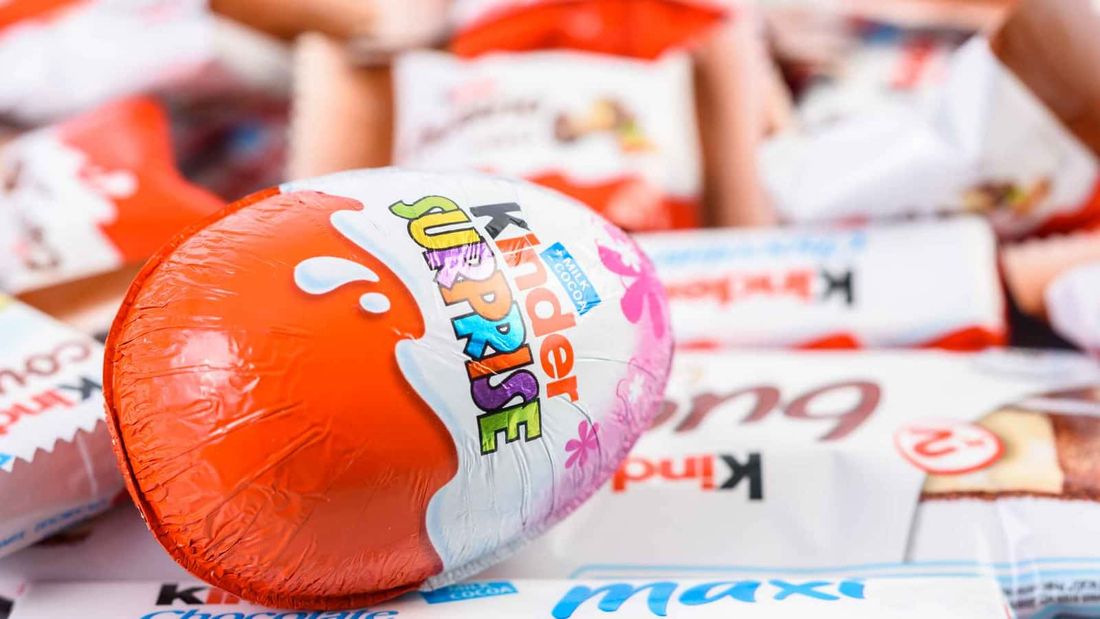
Chocolate bars from the Kinder brand have placed one of Lebanon’s major retailers at the centre of widespread controversy after shoppers spotted packages bearing Hebrew writing, raising questions about how the products reached local markets and whether their presence complies with Lebanon’s law on boycotting Israel.
The controversy erupted after photos and videos circulated showing the products on display at a branch of the Charcutier Aoun supermarket chain in the Sin El Fil area, east of Beirut.
According to L’Orient Today, the chocolate is manufactured in Italy by the Ferrero Group, but its packaging contains information indicating that it was intended for the Israeli market. This includes the name of an importing company based in the city of Holon, as well as a kosher certification issued by Israel’s Chief Rabbinate.
How Did the Products Reach Lebanon?
Lebanese newspaper An-Nahar reported, citing preliminary information, that the products entered the market through a trader from the city of Tripoli, rather than through the brand’s authorised distributor.
Meanwhile, sources at the Ministry of Economy and Trade confirmed that the case was being followed up to verify the shipment’s origin and import route.
Nabil Fahd, head of the Syndicate of Supermarket Owners in Lebanon, explained that the presence of Hebrew writing on packaging does not necessarily mean that the products were manufactured in Israel. He noted that international companies sometimes include information about their importers in different countries on the same packaging.
Penalties of Up to 10 Years in Prison
Lebanon’s law on boycotting Israel, which has been in force since 1955, prohibits the import and trade of Israeli products. The ban also covers certain goods manufactured outside Israel or re-exported from there.
Penalties for violations range from three to 10 years in prison with hard labour.
This is not the first incident of its kind in Lebanon. In 2023, a similar case emerged after products bearing Hebrew writing were seized. Preliminary investigations found that they were Turkish-made towels intended for the Israeli market.