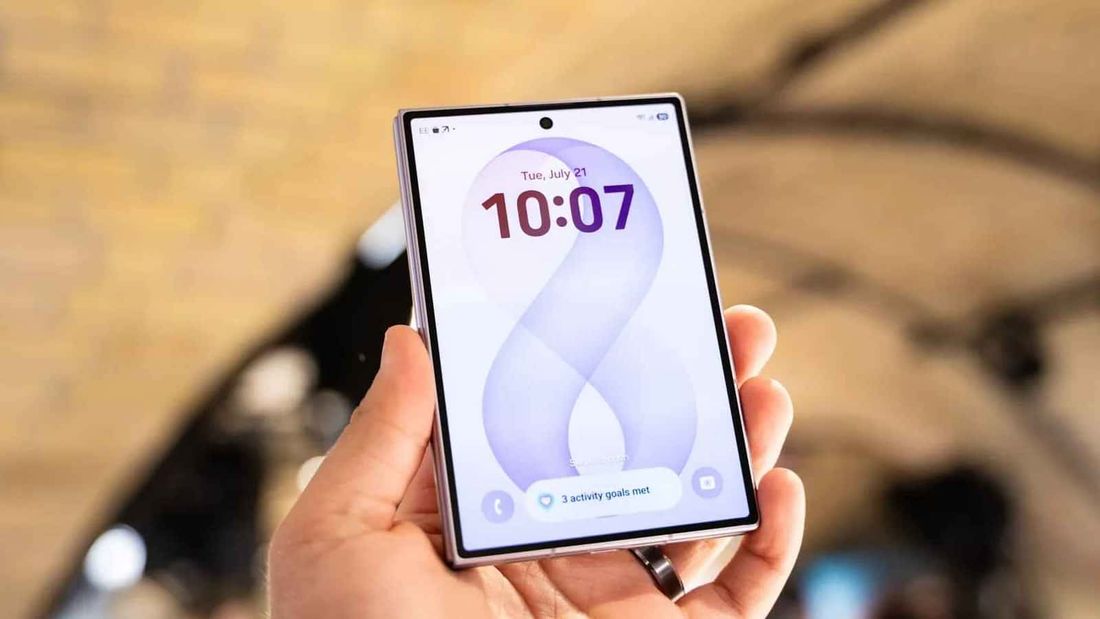
You may place your foldable phone in your pocket or bag and carefully close its screen, thinking you are protecting it from scratches and impacts. However, a tiny pebble measuring just a few millimetres could be enough to turn your expensive device into a black, unresponsive screen.
This is no longer merely a theoretical possibility. A test conducted by a Japanese consumer protection authority has revealed an unexpected risk to foldable phone screens, highlighting a design vulnerability related to the nature of these devices and their delicate displays.
A User Complaint Reveals the Problem
The issue came to light after a foldable phone user filed a complaint, reporting that the device’s screen had malfunctioned after just two months of use.
According to the complaint, the screen initially began flickering abnormally before eventually turning completely black, leaving the phone unusable under normal conditions.
An examination of the device revealed scratches in two areas of the screen, each measuring approximately three square millimetres. This led researchers to suspect that a foreign object, such as a small pebble, had become trapped between the two halves of the screen when the phone was closed.
A Test Reveals the Risk
To verify this theory, researchers conducted a practical test using a foldable phone, placing a small piece of gravel measuring approximately three millimetres between the two halves of the screen.
They then closed the phone and applied a weight of approximately two kilograms to simulate the pressure the device might experience during everyday use. The result was striking: scratches similar to those found on the device mentioned in the complaint appeared after approximately 20 opening and closing cycles.
The tests showed that pressure caused by a hard object trapped between the two halves of the screen can damage its delicate layers, particularly the OLED displays used in many foldable phones.
Greater Sensitivity
Foldable phones differ from conventional smartphones in their screen design. They rely on flexible layers that allow the display to bend and repeatedly return to its flat position.
This technology requires a delicate balance between flexibility and durability, making the screen more vulnerable to certain types of localised pressure, particularly when a hard object becomes trapped between the two halves of the device.
Unlike conventional screens, the folding area and flexible internal layers require special care. Damage may extend beyond a surface scratch to affect the internal display components, causing lines, flickering or complete screen failure.
Useful Warnings
In light of the test results, the Japanese authority stressed the importance of checking that the screen is free of foreign objects before closing the phone, particularly grains of sand, small pebbles and hard particles of dust.