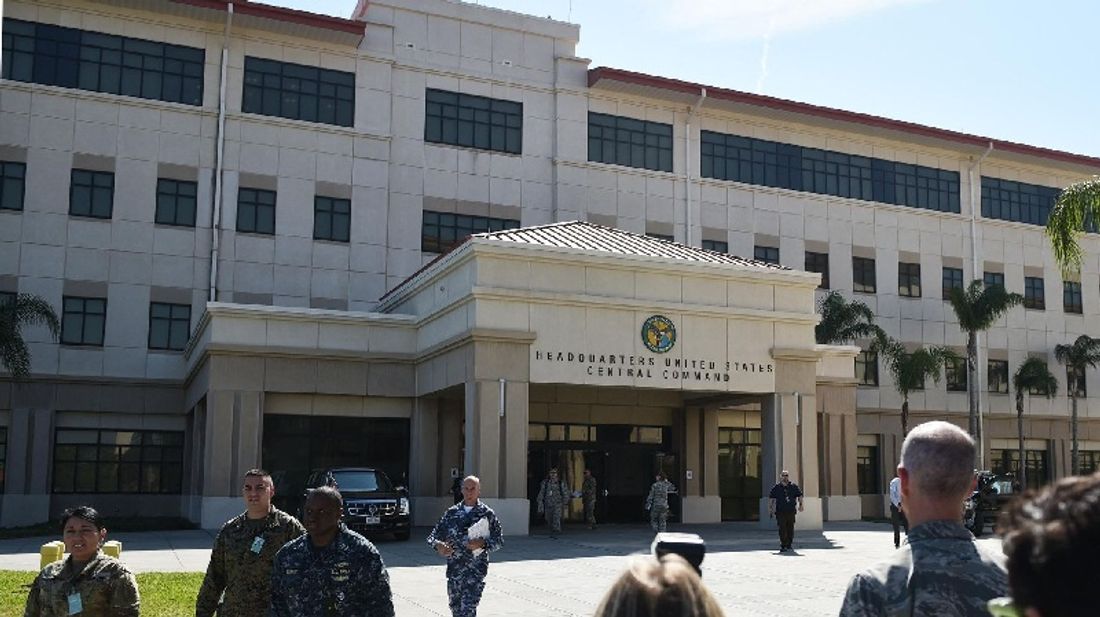
It is now almost certain that the 8th military round of Lebanon's negotiations with the Israeli enemy, under American sponsorship at the US Central Command headquarters in Tampa, Florida, has been postponed until after the Israeli elections and the US midterm elections. This comes despite yesterday's meeting between Lebanon's ambassador in Washington, Nada Moawad, and officials at the US State Department.
While an official Lebanese source spoke of ongoing contacts that will determine whether the Florida talks are held or postponed, information obtained exclusively by the "Al-Joumhouria" website revealed that US Ambassador Michel Issa advised President Joseph Aoun to push back the trilateral military meeting until after the Israeli and US midterm elections. He stressed that the preoccupation of the American administration and of Israel prevents any implementable understandings from being reached.
The information indicated that Ambassador Issa said the meeting would be pointless and would deliver no achievement for Lebanon at this time. It suggested that Issa had submitted his report to the State Department to that effect, and that the American administration may have been persuaded by this view and adopted it.
However, the postponement has heightened Lebanon's concerns that Israeli Prime Minister Benjamin Netanyahu might exploit this "gray timing" to score Israeli electoral points at Lebanon's expense. This possibility prompted the President to contact American officials to prevent any attempt by Netanyahu to profit electorally from escalation in Lebanon or from expanding the security zone. Unconfirmed information stated that President Aoun received American "reassurances" on this matter.
Amid this atmosphere, a senior political source told "Al-Joumhouria" that holding the military side of the negotiations may offer Lebanon nothing at present, but that postponing this round could serve Netanyahu. The source questioned the true nature of the American role, which has so far shown neither balance nor concern for Lebanon, but has instead fully adopted the Israeli viewpoint and allowed "Israel" to continue its aggression on Lebanon, and possibly to expand the security zone in southern Lebanon.
The source believed that Washington has still not been able to present itself as a mediating sponsor, nor moved to a position of offering guarantees to Lebanon, and instead continues to impose conditions on the Lebanese authorities.
Asharq Al-Awsat:
The newspaper Asharq Al-Awsat confirmed that the Lebanese-Israeli military meeting under American sponsorship has been postponed until after the Knesset elections in Israel and the midterm elections in the United States. This prompted the drawing up of a preemptive plan to deal with the possibility that Israeli Prime Minister Benjamin Netanyahu might lean toward expanding the security zone by targeting the heights and hills stretching between Iqlim al-Tuffah and Jabal al-Rihan.
It said that filling the vacuum and managing the period leading up to the Israeli elections on October 27 is President Joseph Aoun's main preoccupation, so as to absorb the repercussions if Netanyahu insists on expanding the security zone.
Asharq Al-Awsat learned from a political source directly involved in the Lebanese-Israeli negotiations that Aoun is in contact with senior officials in the American administration to pressure Netanyahu and block him, should he conclude that he urgently needs to expand the security zone as a political lever to secure his return to the premiership.
American guarantees against escalation
The political source confirmed that Aoun received American assurances that Netanyahu will not be given a green light to expand this zone, in return for not providing him with pretexts to justify targeting the heights between Iqlim al-Tuffah and Jabal al-Rihan. The source noted that Hezbollah is the party meant here, and said that, because dialogue between them has been cut off, Aoun is instead consulting with Parliament Speaker Nabih Berri to pass a message on this matter to his ally. Hezb0llah , it noted, remains committed to the ceasefire and does not respond to Israeli attacks and violations.
The source revealed that passing a message to Hezb0llah did not come out of nowhere, but in light of information available to security and military leaders that the party has taken a set of precautionary measures to confront the possibility of Netanyahu expanding the security zone by targeting the heights between Iqlim al-Tuffah and Jabal al-Rihan. The source ruled out any initiative by to Hezb0llah breach the ceasefire.
Al-Liwaa:
According to information from the newspaper Al-Liwaa in Washington, Lebanese Ambassador Nada Hamadeh Moawad visited the US State Department to follow up on the formation of monitoring committees and the mechanism for verifying the Israeli withdrawal in the south, but no agreement has yet been reached on any such mechanism.
An-Nahar:
An-Nahar, citing political sources, said that the stalling of the Lebanese-Israeli negotiations is no longer tied only to the divergence of positions between the two sides, but increasingly to the nature of the American role and the limits of the guarantees Washington can provide. The central question is whether the American administration is seeking a comprehensive agreement that defines mutual obligations, timeframes, and verification mechanisms, or is managing a phased track that prioritizes Israeli security demands without linking them to a clear withdrawal timetable. The sources warned that the lack of balance between obligations could turn negotiation into a mechanism for managing facts on the ground rather than a path to ending them: concrete security and political steps would be demanded of Lebanon, while the Israeli withdrawal would remain subject to Tel Aviv's calculations and assessments. They pointed out that the crux lies in Washington's ability to move from the position of mediator to that of guarantor.