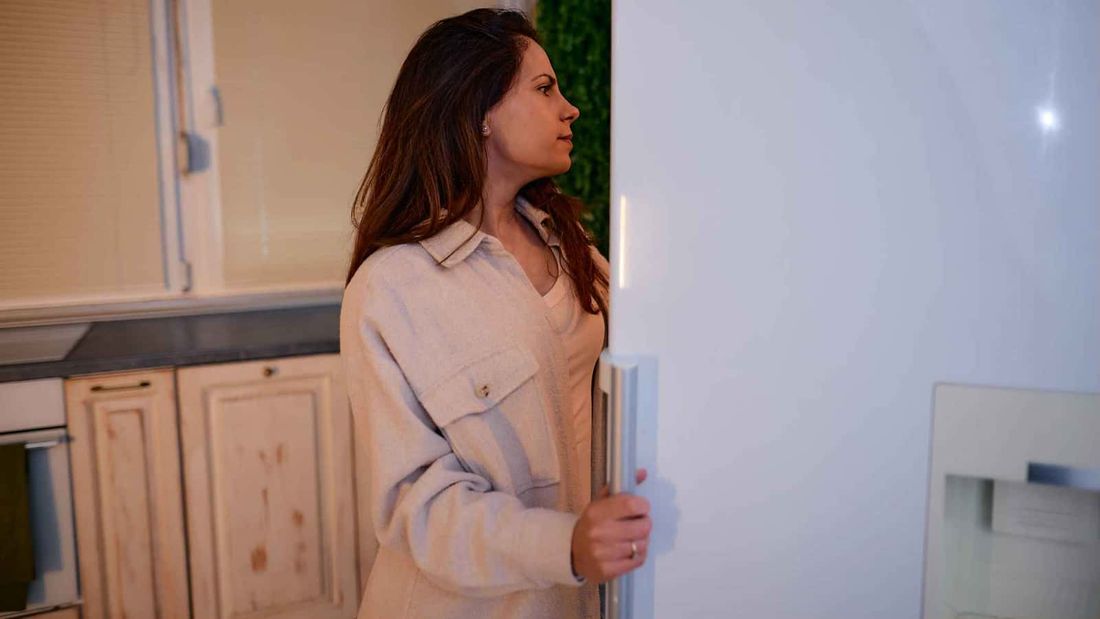
When the power suddenly goes out, whether because of a storm or a fault in the electricity grid, many people worry about the food stored in their refrigerators and freezers. Some may open the freezer door to check the condition of meat and other foods. However, this action can accelerate the loss of cold air and increase the risk of food spoilage.
According to a report published by Futura Sciences, keeping the freezer door closed throughout a power outage is the most important step in preserving frozen food. Opening the door allows cold air to escape and warm air to enter, causing the temperature inside the appliance to rise more quickly.
Why Should You Avoid Opening the Freezer?
Freezers have thick insulating layers that help them retain cold temperatures for hours, even without electricity. The mass of frozen food itself also helps maintain a low temperature inside the appliance.
However, even opening the door briefly allows cold air to escape and warm, humid air to enter, accelerating the thawing of the outer layers of food. Repeatedly opening the door to check on the contents reduces the length of time the appliance can retain its cold temperature.
How Many Hours Can Food Stay Frozen?
The length of time food remains frozen depends on the size of the freezer, the amount of food inside, and how tightly the door seals:
A Fully Stocked Freezer
It can keep food frozen for up to 48 hours, provided the door remains closed.
A Half-Full Freezer
It may retain its cold temperature for approximately 24 hours.
A Small Freezer Compartment Inside a Refrigerator
It may keep food safe for only 4 to 6 hours, depending on the appliance's conditions.
The Risks of Thawing and Refreezing Food
Freezing does not eliminate all bacteria; it only limits their activity. When food warms up during thawing, some bacteria may begin to multiply, including Salmonella, Listeria, and Staphylococcus aureus.
If food thaws partially or completely and is then refrozen without knowing the conditions to which it was exposed, it may become unsafe, even if it appears to have returned to its frozen state after the electricity comes back on.
The report points out that some bacterial toxins may not be eliminated by ordinary cooking. Therefore, refreezing or cooking should not be relied upon to correct improper food storage.
The Coin Test: Finding Out What Happened While You Were Away
The report suggests a simple household method to help determine whether the water inside the freezer thawed and then refroze, using a glass of water and a coin.
The idea is to monitor the coin's position relative to the ice. If its position changes as a result of the ice melting and subsequently refreezing, this may indicate that there was a prolonged power outage or that the freezer's temperature rose.
However, this test does not establish whether the food is safe, nor does it determine its temperature or how long it was exposed to thawing. It should therefore not be used as the sole basis for deciding whether to eat the food.
Food safety guidelines recommend measuring the temperature of food, discarding products whose safety cannot be confirmed, and never tasting food to determine whether it is safe to consume.
According to experts, the most important rule during a power outage remains keeping the freezer door closed and minimizing handling of the food until electricity is restored and its safety can be assessed.